18 days Madagascar Expedition 2026 & 2027 (especially for senior traveler)

18
DAYS
12
GUESTS (MAX)
Tourists Taxe All domestic tickets flight (TNR TLE , MOQ TNR, SMS TNR) All accommodations mentioned above Transfer from the airport to the hotel and from the hotel to the airport Bus with Air Conditional Driver Guide (with English speaking) Visits and excursions (following the itinerary) Guides + entrance fees included for all national parks/reserves Administrative management package Bottles of water (1 per day/per person) Breakfasts, Lunches and Dinners (Full Board) All Motor boat transportations (In the Pangalane Chanel and El Condor) Picnic lunch in Isalo NP
  • International tickets flight
  • Insurance
  • Drinks
  • Your guide will manage all programs’ timing
  • Domestic flights: TNR – TLE , MOQ – TNR and SMS – TNR
  • During the trip, the following dietary requirement(s) are served: Regular (typically includes meat, fish, milk, sea food, …). If you have special dietary requirements it’s a good idea to communicate it to us
  • Please note that the feasibility of the tour will depend on the availability of the proposed or similar accommodations
  • During the trip we will pass through difficult and bumpy road, we would like to set your expectations, so if you have any motion sickness, please let us know.
  • We do not take responsibility for any airline schedule changes that may occur after quoting or booking. We will do everything we can to alleviate any disruption of your itinerary or holiday but cannot be held responsible for any loss of funds, bookings, missed connections or other prebooked/paid services.
This tour will take you from Antananarivo to Isalo, Ranomafana, Kirindy, Andasibe:
  • Isalo National Park
Isalo is located in the south of Madagascar in Ranohira. The park extends over an area of 81,54 hectares. Isalo is home to a population dominated by the Bara ethnic group mixed with communities of various origins who settled there because of the exploitation of sapphire in the surrounding area of Ilakaka. The territory is also a historically rich archaeological site, as it retains the continental plate connecting Madagascar with Africa, two million years ago.
Tourist attraction
A true tourist attraction for its geomorphological singularities, at the same time varied and unique in the world, it is the most visited site on the island. The park is of rock structure that is globally shaped by the erosion of reddish mountainous sandstones dating back to the Jurassic era of 200 million years ago, extending for nearly 100 kilometers in the north-south direction.
Form
Its varied sculptural form is a chain of deep canyons, peaks up to 200 meters high, masses of granite and rock blocks of unstable appearance. There are currently 82 species of birds, 33 reptiles, 15 amphibians, and 14 mammals including seven primates. Among these, there are the maki, sifaka, and varika. As far as tourists are concerned, the main attractions are the pedestrian routes which, from the outset, are reminiscent of a decorative façade of the Far West.
  • Ranomafana National Park
The Ranomafana National Park is located in the southeast of Madagascar straddling the regions of Upper Matsiatra and Vatovavy Fitovinany. It is 412 km south-east of Antananarivo, 65 km north-east of Fianarantsoa and 139 km west of the town of Mananjary.
National Park
Terrestrial National Park classified World Heritage Site with its dense low-lying humid forest (600-800m), its dense humid forest of medium altitude (800-1400m), its bamboo forest, its marshland where plant and animal species such as Pandanus, Varecia variegata variegate, Crayfish, Limnogale Mergulus choose as habitat. 6 species of fish, 74 species of insects, 90 species of butterfly including 4 rare species, 350 species of spiders, 6 endemic species of crustaceans and a subspecies of crayfish of the group of Astacoides.
What inside?
58 species of reptiles, 98 species of amphibians, 115 of the 257 species of birds of Madagascar the majority of which is endemic. 12 species of lemurs, 7 species of carnivorous mammals and 20 species of insectivores, 07 species of bats including Myzopoda aurita, a monogenous that exists only in Madagascar. There are also 13 species of rodents. The Ranomafana forest is of the rainforest type whose hard core considered as primary forest is distant from the road axis.
Flora
There are Apocynaceae, Euphorbiaceae and Rubiaceae, Dypsis sp and Phloga sp of the family Palmae, Asplenium nidus, orchids of the genera Bulbophyllum and Eulophiella. Large areas of secondary forest are occupied by Psydium cattleyanum of the family Myrtaceae. Tropical hardwoods such as rosewood or Dalbergia sp, maka or Weinmania sp and varongy or Mespilodaphne tapack are also visible. A profusion of rare plants is also identified: ferns, bamboos and hundreds of orchids. Chinese guava occupies more and more spaces and is dispersed by lemurs and frugivorous birds.
  • Kirindy National Park
The Kirindy National Park is located in the Menabe region, Kingdom of Sakalava located about 70 km south of Morondava on the edge of the Mozambique Channel. Kirindy amongs the 20 new UNESCO Biosphere Reserves! A total of 669 representing 120 countries. Terrestrial National Park and RAMSAR Site and BIOSPHERE RESERVE. It is the transition between the biodiversity of the West and the South: dense dry forest that occupies 70% of the park, thorny thicket Didiereaceae and Euphorbiaceae, brackish coastline lake, habitat of many species, birds, reptiles, lemurs. Endemicity of biodiversity: 97%.
  • Andasibe National Park
Andasibe National Park is a part of Toamasina. It is 1.5 kilometers from Andasibe, 140 kilometers from Antananarivo, and 200 kilometers from Tamatave. The surface of the area is 16,310 hectares (Analamazaotra Special Reserve is 810 hectares while Mantandia National Park is 15,500 hectares). The climate is very humid, the average annual temperature is 18 degrees Celsius, and the average annual rainfall is 1,700 millimeters spread over 210 hectares.
Fauna
The park consists of 80% primary forests and 13% secondary forests, subject to the impact of human activity. The special reserve is dedicated to the protection of the largest Malagasy lemur, the indri. An orchid park is also open to the public. There are three campsites and a hotel in the park. When you travel in Madagascar and if you are fans of nature, do not miss to visit this park.
  • Ankanin’ny Nofy
The Palmarium reserve place called Ankanin’ny Nofy (The dream nest) located on the east coast of Madagascar, located on 50 ha at the edge of Lake Ampitabe and the Indian Ocean on the Pangalanes Canal. Accessible only by boat at 2h30 from Tamatave at the Kilometric point 60PK. About 12 species of lemurs evolving in full freedom in the reserve, Indri, Sifaka, Coronatus, Varécia, variegata, Sifaka.
Fauna
A rare and endemic terrestrial and arboreal fauna as well as a magnificent flora (orchids, carnivorous plants, ebony, mahogany, traveller’s trees) … the most beautiful palm trees specific to Madagascar, including the rarest varieties (Dypsis, Ravenea, Orania, but also Voanioala and Lemurophoenix).
  • Climate
The climate is tropical, but cooler in the highlands (dropping as low as 5°C at night in July/August in Antananarivo and Andasibe). The dry season is March to October continuing into November in most areas. The east coast is best March-May and September-November, January-March is cyclone season. The south west area is hot, dry and semi-arid.
Best time
March-April is the best time for flowers and reptiles. November (spring) is generally the best time for wildlife and birds, but lemurs can be viewed all year round. Seasonal weather patterns can be unpredictable.
  • Altutude
    – Antananarivo : 1300m – Andasibe : 964m – Morondava : 22m maximum and an average altitude above sea level of 6m – Kirindy : 100m – Bekopaka : 334m – Antsirabe : 1500m – Ranomafana : 876m – Isalo : Varies from 800m to 1200m – Tulear : 8m – Ankanin’ny Nofy : 9m – Toamasina : 11m – Sainte Marie : 5m
  • Equipment
HT Agency Tours offers torches for nocturnal wildlife walks, a water bottle. Please bring camera film (and spare batteries), binoculars and a beach towel and swimwear. Rain proof pants are very handy for walks in the rainforest. Walking poles maybe useful in Ranomafana NP and Andasibe NP. Lightweight walking bootshoes and trainers is recommended.
What to wear?
Clothing should be lightweight, but a warm sweater or jacket is advisable as nights at altitude and under desert conditions can be very cold, even in summer and especially in July to September. Rainwear is highly recommended on all tours for the occasional shower. Warmer layers will be required during the winter months.
  • Visa and Passport
Madagascar: An entry visa is required by USA citizens and can be obtained on arrival. The visa is chargeable at 40USD and issued for 30 days. The visa fee is payable in USD or Euro and we advise to take small denominations and a little extra as the USD amount is calculated daily by the applicable rate of exchange. Other nationalities should consult the relevant consulate. For a single-entry tourist visa, you can apply via the e-visa website: https://evisamada.gov.mg/en/ You will need to print a copy of your evisa approval letter and present this with your passport at immigration upon your arrival.
Approval time
The approval letter will take a minimum of 3 days to be processed so we strongly advise for you to apply within plenty of time (maximum of 6 months prior to your arrival) before your departure. You will be permitted to stay within Madagascar for a maximum of up to 90 days and we strongly recommend for you to read the FAQ section on the e-visa website before applying.
  • Insurance
It is a condition of booking with HT Agency Tours that you have adequate valid travel insurance. It is your responsibility to arrange appropriate travel insurance and ensure you have read and understood the full terms and conditions of your travel insurance policy to ensure that you are covered for all activities you intend to undertake whilst on the tour, including all optional activities.
Policy
Your Insurance Policy must fully cover you for medical expenses and emergency repatriation to your home country. Please ensure your policy includes medical emergency helicopter evacuation in the event of illness or injury and covers the entire duration of your holiday. If you are trekking at altitude, please ensure that there is no upper altitude limit which may limit or exclude cover for your trip.
  • Vaccinations
Nothing compulsory, but we recommend protection against malaria, tetanus, typhoid, hepatitis A plus, Polio and diptheria. Please note that all travellers aged over 9 months old that have travelled from or have transit via a country with a risk of yellow fever transmission, will need to present a Yellow Fever certificate at immigration/borders in Madagascar for inspection.
Malaria
Consult your travel clinic for latest advice on different prophylaxis available against malaria. Following the advice given by the Government’s Foreign and Commonwealth Office, we strongly recommend the wearing long sleeved shirts and the liberal application of insect repellent as a precautionary measure to avoid being bitten by mosquitoes. These precautions should be taken at all times as the mosquitoes are also active during daylight hours. Please check the latest requirements with your travel clinic or doctor prior to departure.
  • Food and drink
The costs of meals may vary according to the location, type of restaurant and number of courses eaten and so the prices given below are just an average guide. Local restaurants located off the beaten track may be less expensive, whereas an upmarket restaurant located in the center of a major city may charge more:
  • Lunch price: 10 USD
  • Dinner price: 17 USD
  • Beer price: 2 USD
  • Watter price: 1 USD

1. What are the Best Madagascar Tours for Seniors looking for comfort and easy-paced travel?

The Best Madagascar Tours for Seniors usually include gentle wildlife walks, private driver-guides, comfortable lodges, and relaxed pacing. Most itineraries feature Andasibe, the Avenue of the Baobabs, Kirindy, and a coastal stay in Nosy Be for effortless exploration.


2. Are the Best Madagascar Tours for Seniors physically challenging?

No. These programs are designed with accessibility in mind. Trails included in the Best Madagascar Tours for Seniors are generally flat, short, and shaded, making them suitable for travelers who prefer low-impact activities.


3. Is Madagascar safe for older travelers joining the Best Madagascar Tours for Seniors?

Yes. When you travel with a reputable operator, the Best Madagascar Tours for Seniors include private guides, reliable drivers, and pre-arranged logistics, ensuring a smooth and secure experience throughout the journey.


4. What wildlife can travelers expect to see during the Best Madagascar Tours for Seniors?

Guests commonly encounter Indri lemurs, sifakas, bamboo lemurs, chameleons, rare birds, and vibrant rainforest flora. The Best Madagascar Tours for Seniors highlight easy-access reserves where wildlife observation is comfortable and rewarding.


5. Can long road trips be avoided during the Best Madagascar Tours for Seniors?

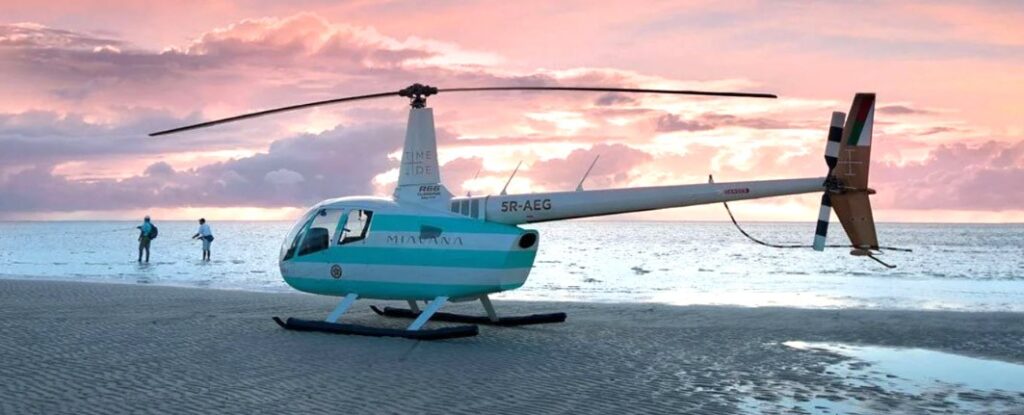
Yes. Many itineraries integrate internal flights or optional private aviation. This significantly reduces driving time and enhances overall comfort, which is why flying segments are a popular addition to the Best Madagascar Tours for Seniors.


6. When is the best time of year to book the Best Madagascar Tours for Seniors?

The ideal travel window runs from April to November, offering mild temperatures, low humidity, and exceptional wildlife visibility. This period is highly recommended for the Best Madagascar Tours for Seniors.


7. Do the Best Madagascar Tours for Seniors include beach relaxation options?

Absolutely. Many travelers choose itineraries that combine rainforest discovery with coastal stays in Nosy Be or Anjajavy. These destinations provide gentle activities, wellness facilities, and peaceful environments—perfect for the Best Madagascar Tours for Seniors.


8. How long should the Best Madagascar Tours for Seniors last?

Most guests choose 10 to 14 days to enjoy a balanced itinerary that includes wildlife, culture, scenic landscapes, and beach rest. This timeframe ensures a comfortable pace for the Best Madagascar Tours for Seniors.


9. Are private guides included in the Best Madagascar Tours for Seniors?

Yes. A dedicated English-speaking guide accompanies most itineraries. This ensures a personalized experience, flexible pacing, and professional assistance at every step during the Best Madagascar Tours for Seniors.


10. What type of accommodations are included in the Best Madagascar Tours for Seniors?

Most programs include boutique lodges, rainforest eco-resorts, and beachfront retreats with accessible facilities, walk-in showers, excellent dining, and high comfort standards—essential elements for the Best Madagascar Tours for Seniors.


11. Can dietary preferences be accommodated in the Best Madagascar Tours for Seniors?

Yes. Lodges and hotels across Madagascar can adapt to specific dietary requests when notified in advance. This service is automatically integrated into the organization of the Best Madagascar Tours for Seniors.


12. Are cultural experiences included in the Best Madagascar Tours for Seniors?

Yes. Many itineraries include artisan markets, storytelling sessions, historical visits, traditional cuisine, and village experiences—all curated to ensure accessibility and comfort for the Best Madagascar Tours for Seniors.


13. How are the Best Madagascar Tours for Seniors adapted to different comfort levels?

Tours are fully customizable. Travel designers adjust walking duration, transportation methods, rest days, and accommodation style to match each traveler’s preferences, ensuring a smooth and enjoyable experience in the Best Madagascar Tours for Seniors.


14. What makes the Best Madagascar Tours for Seniors different from standard Madagascar itineraries?

These tours prioritize comfort, efficient routing, flexibility, and easy-access experiences. They combine iconic wildlife, scenic landscapes, and premium stays while removing strenuous activities—making the Best Madagascar Tours for Seniors ideal for travelers seeking gentle adventure.


15. How far in advance should the Best Madagascar Tours for Seniors be booked?

It is recommended to book 6 to 12 months in advance, especially for peak months such as July, August, September, and October. Premium lodges used in the Best Madagascar Tours for Seniors fill up quickly during these periods.


16. What is the most comfortable and time-efficient itinerary included in the Best Madagascar Tours for Seniors?

A highly recommended format includes Andasibe for wildlife, Morondava for baobabs, Kirindy for forest encounters, and Nosy Be or Anjajavy for coastal relaxation. With internal flights integrated, this becomes one of the most comfortable and efficient options within the Best Madagascar Tours for Seniors.

Overview

SUMMARY

Small group tour departure 2026 & 2027 – This Madagascar Small group tour is ideal especially for senior travelers

DEPARTURE DATE
2nd Group: JULY 18th, 2026 (Most recommended date)

DURATION : 18 days
AREA          : 
Southern, Western and Eastern of Madagascar
TRIP            : Group size per departure ( minimum 4 pax – maximum 12 )
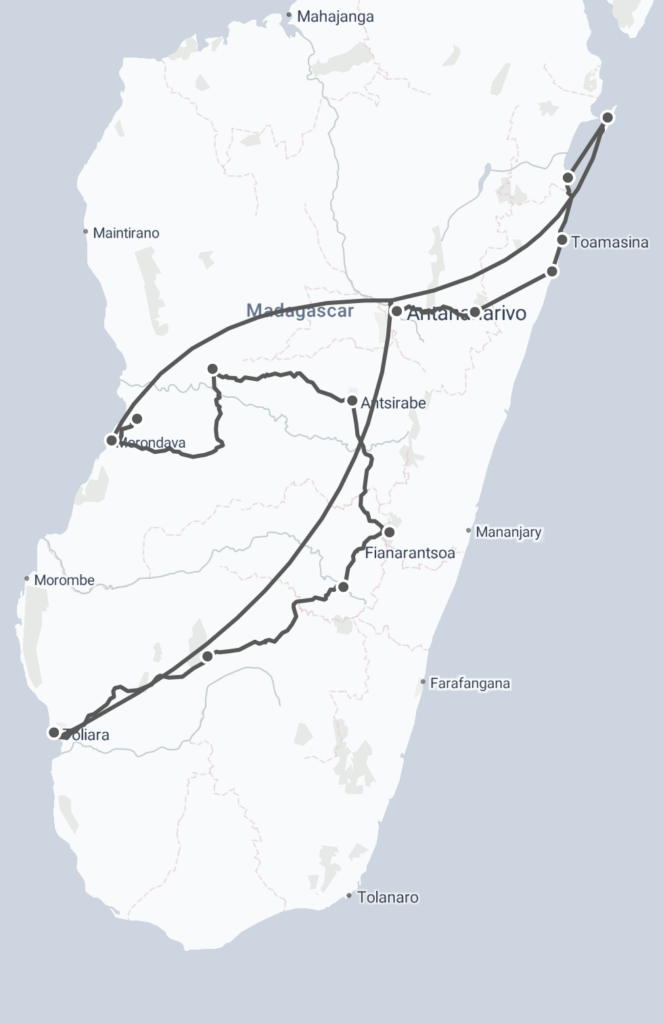
PLACES TO VISIT : Antananarivo – Tulear – Isalo – Ranomafana – Antsirabe – Miandrivazo – Kirindy – Andasibe – Ankanin’ny Nofy – Tamatave – Sainte Marie (Nosy Borra)
ACCOMODATION TYPE :
 Comfort (Half Board)
TRANSPORT TYPE: BUS/ Regular Flight                     BACK TO ANTANANARIVO: Regular Flight
ASSISTANCE: Guide / Local Guide (With English speaking)
TOUR AVAILABILITY: ALL OVER THE YEAR

(this tour is also available as a private tour departure, please feel free to reach out for more information)

18 Days Madagascar Expedition 2026 & 2027 (By Region)

An 18-day journey across Madagascar offers the time and depth needed to truly understand the island’s extraordinary diversity. Designed specifically for travelers from the USA, UK, and Canada, this Madagascar Small group tourcombines expert planning, immersive regional exploration, and a travel rhythm that feels both rewarding and comfortable.

Rather than moving quickly between highlights, this expedition unfolds gradually, allowing each region to reveal its landscapes, wildlife, and atmosphere. For 2026 and 2027, longer itineraries are increasingly favored by travelers who value meaningful discovery, high-quality guiding, and carefully curated logistics.

This guide explains how an 18 Days Madagascar Expedition is structured, which regions are included, and why small-group travel represents the most effective way to experience Madagascar.


A Madagascar Small Group Tour Is Ideal for an 18-Day Expedition

Travel in Madagascar requires careful coordination due to distances, road conditions, and regional contrasts. Choosing a Madagascar Small group tour ensures that these challenges are managed professionally, without sacrificing flexibility or authenticity.

A well-designed small-group format creates space for personal experiences while maintaining a shared journey.

What defines a high-quality Madagascar Small group tour

  • Limited group sizes for comfort and smooth logistics

  • Professional guides with deep regional knowledge

  • Balanced pacing between exploration and rest

  • Seamless coordination of vehicles, flights, and accommodations

Each of these elements contributes to a travel experience that feels effortless rather than exhausting.

Why 18 days provides the perfect balance

Shorter programs often force travelers to rush through regions. An 18-day structure allows:

  • Enough time in each region to explore properly

  • Wildlife encounters without time pressure

  • Scenic routes instead of purely functional transfers

  • A natural rhythm that supports physical comfort

For long-haul travelers, this duration maximizes both value and satisfaction.


Madagascar Small Group Tour by Region: Expedition Structure Explained

A successful expedition relies on a regional approach. Dividing the journey into clearly defined sections ensures that transitions feel logical and rewarding.

This regional design lies at the heart of the most successful Madagascar small group expedition tours.


Central Highlands Introduction in a Madagascar Small Group Tour

Most expeditions begin in the Central Highlands, where elevation and climate offer a gentle introduction to the country.

This region provides essential cultural and historical context before moving into more remote environments.

The Central Highlands matter in Madagascar small group expedition tours

  • Cooler temperatures for arrival acclimatization

  • Historical insight into Madagascar’s past

  • Rolling landscapes and artisan communities

Starting here allows travelers to adjust gradually after long international flights.

Experiences included during the Central Highlands phase

  • Guided city visits and local markets

  • Cultural interpretation by knowledgeable guides

  • Scenic countryside drives

  • Overnight stays in refined, well-located lodges

This opening stage establishes a strong foundation for the journey ahead.


Eastern Rainforest Immersion on an 18 Days Madagascar Expedition

The eastern region introduces travelers to Madagascar’s lush rainforest ecosystems and remarkable biodiversity. For many guests, this section becomes one of the most memorable parts of the expedition.

Dense vegetation, cooler air, and abundant wildlife define the experience.

Why eastern rainforests are essential in Madagascar Small group tours

  • High concentration of wildlife activity

  • Excellent conditions for guided walks

  • Strong conservation and guiding infrastructure

Extended stays here significantly increase the quality of wildlife encounters.

Key activities during the eastern rainforest stage

  • Early-morning forest walks with specialist guides

  • Evening excursions focused on nocturnal species

  • Canoe journeys along forest rivers

  • Educational interpretation of flora and fauna

Time spent in this region often reshapes how travelers perceive Madagascar as a whole.


Western Madagascar Landscapes in a Madagascar Small Group Expedition

A dramatic change in scenery awaits in western Madagascar. Dry forests, wide horizons, and iconic natural landmarks characterize this phase of the journey.

The contrast between regions becomes especially striking at this stage.

West regions elevate Madagascar small group expedition tours

  • Landscapes found nowhere else on the island

  • Lower visitor numbers in protected areas

  • A powerful sense of scale and isolation

Reaching these areas requires careful planning, making small-group logistics essential.

Signature experiences in western Madagascar

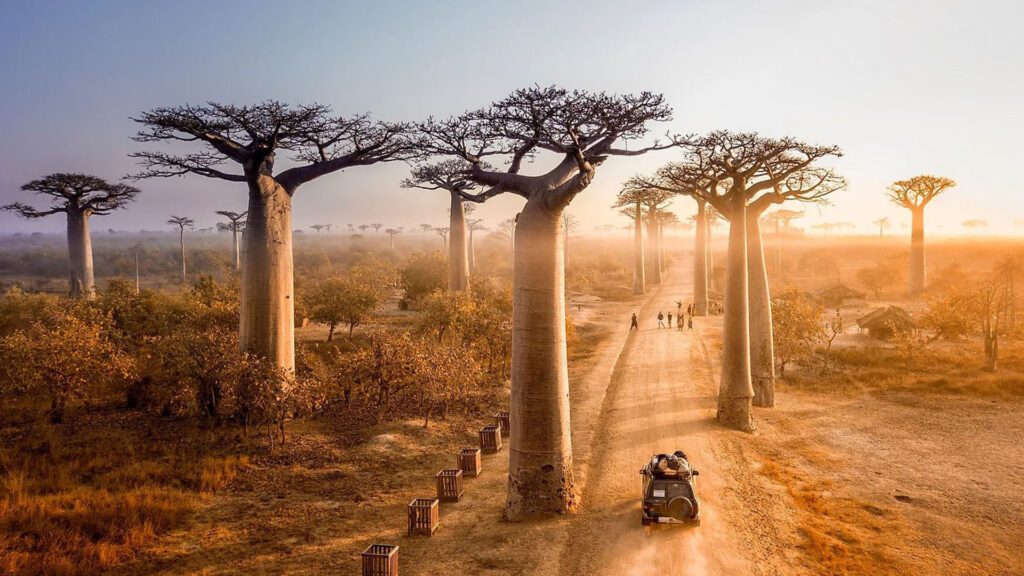
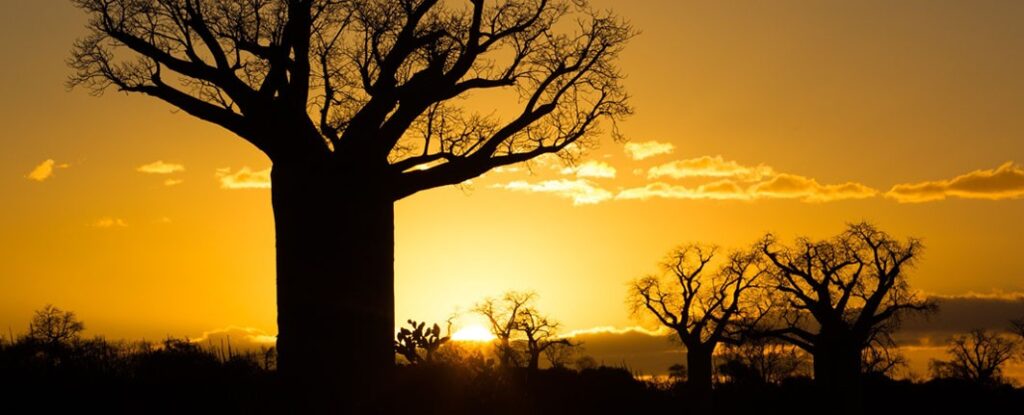
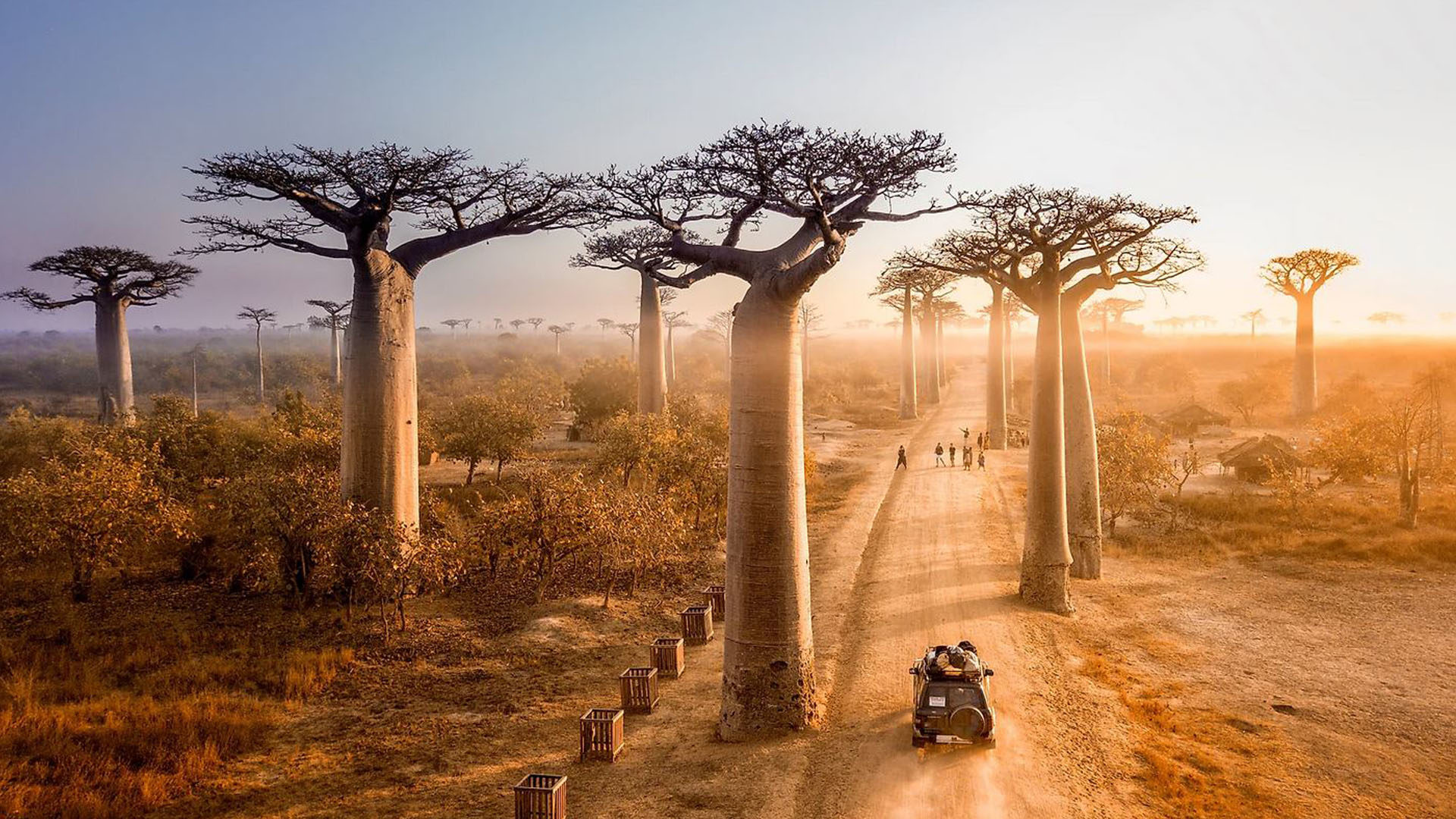
  • Sunset visits to monumental baobab landscapes

  • Guided walks in dry forest reserves

  • Scenic drives and river crossings

  • Lodges chosen for location and atmosphere

Western Madagascar delivers some of the expedition’s most visually powerful moments.


Southern Madagascar Exploration in an 18 Days Madagascar Expedition

Southern Madagascar introduces geological diversity and wide-open terrain, adding depth and contrast to the itinerary.

Here, landscapes feel raw, spacious, and profoundly different from the rainforest regions.

Why the south completes a Madagascar Small group tour

  • Sandstone formations shaped over millions of years

  • Semi-arid ecosystems unique to the region

  • Strong opportunities for walking and photography

Including the south ensures that the expedition reflects Madagascar’s full geographic range.

Experiences included in southern Madagascar small group tours

  • Guided walks through canyon landscapes

  • Scenic routes across remote countryside

  • Encounters with plant species adapted to dry climates

  • Evenings spent in characterful lodges

This region appeals particularly to travelers who enjoy scenery and light physical activity.


Coastal Relaxation in Madagascar Small Group Expedition Tours

After inland exploration, coastal areas provide a welcome change of pace.

Ocean landscapes offer space to rest, reflect, and enjoy a slower rhythm.

Why coastal extensions enhance Madagascar small group tours

  • Physical recovery after active exploration

  • Opportunities for marine activities

  • A gentle conclusion to the expedition

Without this coastal phase, long journeys can feel incomplete.

Typical experiences during the coastal stage

  • Snorkeling in clear coastal waters

  • Leisure boat excursions

  • Seasonal marine wildlife observation

  • Unstructured time for relaxation

This final chapter balances discovery with comfort.


Sample Framework for an 18 Days Madagascar Small Group Tour

Rather than following a rigid daily schedule, successful expeditions rely on a flexible structure.

Such distribution ensures smooth transitions and minimizes unnecessary travel.


Best Time to Join a Madagascar Small Group Tour in 2026 & 2027

Seasonal planning plays a critical role in expedition success.

Weather patterns and wildlife activity vary significantly throughout the year.

Recommended seasons for Madagascar small group tours

  • April to November offers stable travel conditions

  • July to October provides strong wildlife visibility

  • September to November balances climate and visitor levels

Early planning for 2026 and 2027 secures access to the best guides and accommodations.


Why Small Group Travel Works Best for Madagascar Expeditions

Madagascar rewards travelers who move thoughtfully and adapt to changing conditions.

Small groups allow for this flexibility while maintaining comfort.

Advantages of Madagascar small group expedition tours

  • Easier access to remote lodges

  • Stronger interaction with guides

  • Reduced environmental impact

  • Greater adaptability during travel

Large-scale tours struggle to deliver the same depth of experience.


Expertise, Authority, and Trust Behind Madagascar Small Group Tours

Designing an 18-day expedition requires firsthand experience and continuous refinement.

True expertise comes from operating on the ground and adapting to real conditions.

What defines professional Madagascar expedition planning

  • Long-term local experience

  • Strong partnerships with regional suppliers

  • Accurate travel-time assessment

  • Ongoing itinerary updates

These factors build reliability and traveler confidence.


Frequently Asked Questions About 18 Days Madagascar Small Group Tours

Is this Madagascar Small group tour suitable for first-time visitors?

Yes. The itinerary provides a complete introduction without rushing.

How physically demanding is the expedition?

Most activities remain moderate and adaptable.

Are accommodations comfortable throughout the journey?

Lodges are selected for quality, location, and atmosphere.

How large are the groups?

Group sizes are intentionally limited to maintain comfort and flexibility.

When should bookings be made for 2026 or 2027?

Planning 9–12 months in advance is strongly recommended.


Final Thoughts on the 18 Days Madagascar Expedition 2026 & 2027

An 18 Days Madagascar Expedition focuses on depth rather than speed. Through a carefully curated Madagascar Small group tour, travelers gain access to diverse regions while enjoying expert guidance and thoughtful pacing.

For those planning travel in 2026 or 2027, this expedition format represents one of the most complete and rewarding ways to experience Madagascar.

Authentic Madagascar Tours Package

Group tours & travel | HT Agency Tours

18 days Madagascar Expedition 2026 & 2027 (especially for senior traveler)
Route Map

Itinerary

ANTANANARIVO

DAY 1: ARRIVAL TIME

Arrival in Ivato International Airport. Reception by HT Agency Tours, Meet and greet. Once you have passed customs formalities, it is to the Guide to smooth through the rest of the arrivals process – changing money, setting up your phone with the new SIM card, and anything else you need. it will be easier for us to contact each other. Transfer directly to the hotel in town. Location : Antananarivo Accommodation : Novotel Option : Half Board
ISALO

DAY 2: ANTANANARIVO – TULEAR - ISALO

In the morning, after breakfast, transfer directly to the Airport for flight to the south to reach Toliara TR712 TNR TLE 0615 0805. A private bus with Driver will be waiting for you at the Toliara Airport. Drive directly to the Reserve of Reniala, a dry forest typical of the dry south, meeting the diversity of fauna and flora of the region, including the varieties of Baobab (Baobab Forest). Then, continue to the fisherman village called Ifaty. Ifaty brings together the small Malagasy seaside villages along the bay of Ranobe in the South-west region. Village immersion The village of Ifaty is also a fishing village composed mainly of Vezo and Masikoro, the visit consists on a village immersion. After lunch, back to the road for the North to reach the city of Ranohira, to meet Isalo National Park with one stop for a little detour at the arboretum of Antsokay for discovering the endemic and threatened plants of the South Area. After the visit, Continue up to Isalo. During the journey, you could often stop to enjoy the various changes of the mountain and landscape, for picture or for some breaks if necessary. Toward in the afternoon, arrive in Isalo. Location : Isalo Accommmodation : Relais de la Reine Option : Half Board

DAY 3: ISALO

We’ll have the full day to enjoy the delights of Isalo on foot. We’ll start with a short trek to a beautiful natural swimming pool and then continue deeper into the canyon. Isalo is known for its strange geological formations, eroded by the rain and the wind, which offer some of the most spectacular scenery of the country. Isalo This is also a place where the Bara tribes used to bury their dead. If we are lucky, we may see lemurs during our walk today. A picnic lunch is organized in the park. In the middle of the afternoon, back to the hotel for preparing a short visit to the famous Window of Isalo to appreciate a breathtaking and spectacular scene of the color of the sun (Sunset). Drive back to the hotel after. Location : Isalo Accommodation : Relais de la Reine Option : Half Board
AMBALAVAO

DAY 4: ISALO - AMBALAVAO

Plateau before coming to Anja, a community run park started by local villagers, where part of the income pays the teachers of the local school. Here we’ll walk for a couple of hours into the nearby forest to see almost guaranteed up-close sightings of large families of ring-tailed lemurs. From here we’ll continue to Ambalavao, which houses the fascinating Anteimoro paper factory and the Silk factory. Tonight we’ll stay in the middle of the Betsileo highlands. Location : Ambalavao Accommodation : Betsileo Country Lodge Option : Half Board
RANOMAFANA

DAY 5: AMBALAVAO – FIANARANTSOA - RANOMAFANA

Ambalavao has its market day on Wednesdays and hosts the second largest Zebu market in Madagascar where cattle sellers have been known to walk from Tulear (400km’s away) to attend, we will get to experience the spectacle of market day before we leave for Fianarantsoa for a city tour. Then, we head to Ranomafana, which lies in tropical rain forest typical of Madagascar’s east coast. Ambalavao Here, rather than rice fields or zebu herdsmen, we’re more likely to see small villages selling bananas or charcoal. There may be time this evening to wander the friendly streets of the small village which sits near the entrance. Here we’ll take a short night walk outside the park, hoping to encounter some of the endemic chameleons, tree frogs mouse lemurs that make Ranomafana their home. Location : Ranomafana Accommodation : Thermal Option : Half Board
ANTSIRABE

DAY 6: RANOMAFANA – AMBOSITRA – ANTSIRABE

We’ll have the morning to explore some of the best trails inside the National Park. With our specialist guide we’ll enter the rainforest in the hope of seeing, amongst others, the golden bamboo lemur which was only discovered in 1986. However in addition to lemurs, the park is also rich in birdlife, reptiles, butterflies, lichens, and orchids. The tracks are steep and can be very slippery, but we do not plan to cover a huge distance on foot as the emphasis is very much on experiencing the diversity of the rainforest. Then? We’ll head north towards Ambositra for a city tour to discover the typical Malagasy craft of the region : the marquetry, weaving, and especially wood carving. Then, continue to the city in the highlands of Madagascar, capital of the Vakinankaratra region. Arrive in Antsirabe late the afternoon. Location : Antsirabe Accommodation : Royal Palace Option : Half Board
MIANDRIVAZO

DAY 7: ANTSIRABE - MIANDRIVAZO

Antsirabe is considered Madagascar’s most elegant city as well as being home to more pousse-pousses (local-style rickshaws) than anywhere else in the country. We will start the day by city tour on a Rickshaw, we will pass by the Independence Avenue, then to the Hotel des termes. Then we’ll have the morning to discover some of the craft skills mainly to the Horn Factory for which this temperate city is well known before heading west towards Miandrivazo, some 4-5 hours away and located in the savannah of the lowlands as opposed to the green of the highlands. Location : Miandrivazo Accommodation : Soa Lia Option : Half Board
KIRINDY

DAY 8: MIANDRIVAZO - KIRINDY

We wake up and drive to Morondava and have lunch. Afterwards, we head to the famous ‘Avenue of the Baobabs’ in time for one of Madagascar’s most iconic sunsets and then we drive to Kirindy Forest Reserve. After checking in to our accommodation we’ll head out for a night time nature walk in the hope of seeing the fossa and the giant jumping rat! Location : Kirindy Accommodation : Relais du Kirindy Option : Half Board
ANTANANARIVO

DAY 9: KIRINDY – MORONDAVA - ANTANANARIVO

We start with a short hiking in Kirindy Forest Reserve before we get to the airport of Morondava to take our flight to Tana. After breakfast, around 7:30 AM, beginning of the Guided day visits at Kirindy reserve. Kirindy Reserve is home to seven species of lemur. The most common are the common brown lemurs and the Verreaux’s sifakas. How it looks like? These long-legged, seven-pound lemurs, white with dark patches, leap among tree trunks high in the canopy, propelled by their powerful hind legs but continually maintaining an upright posture. 40 bird, 50 reptile and 15 amphibian species are also found in this magnificent forest. After the visit, drive back to Morondava to reach the your flight departure TR703 MOQ TNR 1300 1405 for Antananarivo. Location : Antananarivo Accommodation : Novotel Option : Half Board
ANDASIBE

DAY 10: ANTANANARIVO - ANDASIBE

This morning we take the National Road N2 to Andasibe, a journey of approximately 5-6 hours (dependent upon Tana traffic!). This drive brings us to the humid part of the country through the green landscapes of the east, with primary forest and lakes. National Road Number 2 En route we’ll stop in Mandraka to visit the private reserve of ‘Peyrieras’ where we can see all different kinds of chameleons, snakes, lemurs and butterflies. We will then continue on to Andasibe National Park, arriving late in the afternoon where we’ll check-in to our hotel for the night. Around 6:30PM, you end this day with a guided night visits which will take 1 hour and half, and then drive back to the hotel. Location : Andasibe Accommodation : Mantadia Logde Option : Half Board
PALMARIUM

DAY 11: ANDASIBE – MANAMBATO - PANGALANE

After breakfast we will enter Andasibe National Park and hike for around 3 – 4 hours. The National Park comprises a huge tropical rain forest in the east boasting of nine species of lemurs. The highlight is the ‘Indri Indri’ which are the largest lemurs of Madagascar. This 810 ha reserve is home to other unique flora and fauna and contains a wide variety of orchids, a verdant canopy, endemic animals such as chameleons, tenrecs, and many varieties of birds. Then? After the hike we will take a stroll through Andasibe village, a typical Betsimisaraka (The-Many-inseparable) village, home to Madagascar’s second largest ethnic group, who cultivate rice and vegetables. This will give us an opportunity to experience their lifestyle and culture. Then we drive to Manambato and from there we will take our boat to our lodge. Location : Pangalane Accommodation : Palmarium Beach Option : Half Board

DAY 12: PANGALANES

This day will be devoted to Panagalanes, which we will explore by boat to enjoy the lush vegetation, the local villages and find out how local people live here. In the afternoon a guided night walk is organized to discover the most famous nocturnal lemur of Madagascar called aye aye. Location : Pangalanes Accommodation : Palmarium Beach Option : Half Board
TOAMASINA

DAY 13: PANGALANES - TOAMASINA

This day is dedicated to transfer you to Tamatave by following the Pangalane Chanel and to Mahambo by Car. So after breakfast, embarkation on a motor boat. On this boulevard, we will cross barges, “bush-boats” (taxis-bush fluvial), canoes …, local transport … Spontaneous greetings between sailors … The shouts of joy of the children on the banks accompany us all along our navigation. We are spectators of unusual and unforgettable scenes of life. Location : Toamasina Accommodation : Calypso Option : Half Board
MAHAMBO

Day 14: TOAMASINA - MAHAMBO

Before we drive to Mahambo, you will spend your time to visit the second economic capital of Madagascar which called Toamasina. This town is also called Tamatave ; Is a port city located on the east coast of Madagascar. Its old town includes Creole houses built on stilts. The wide, palm-lined Independence Avenue leads to a seaside boulevard. Archaeological exhibits and traditional tools are on display at the Regional Museum of the University of Toamasina. Location : Mahambo Accommodation : La Pirogue Option : Half Board
SAINTE MARIE

DAY 15: TOAMASINA – SAINT MARIE

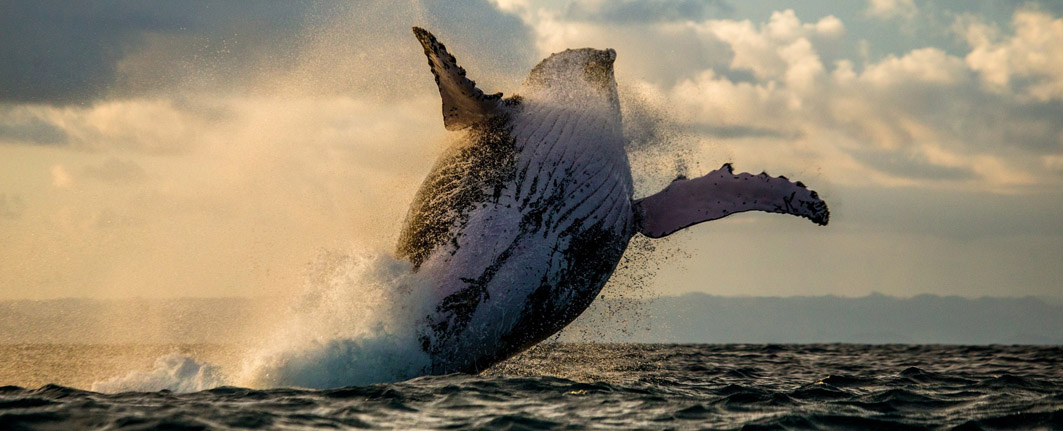
At 09:00am you live Mahambo and board on the El Condor ferry to Sainte Marie Island, travel time 04:00 hours. Opportunity to see whales around. Upon arrival you will be transferred to your hotel and relax for the rest of the afternoon. Location : Sainte Marie Accommodation : Soanambo Option : Half Board

DAY 16: SAINT MARIE

Ile Ste Marie, or Nosy Boraha, is a narrow granitic island 57 km long 8 km off the east coast of Madagascar. This tropical paradise with endless palm fringed beaches and bays surrounded by coral reefs. The island boasts lush vegetation which many species are endemic to the island. The landscapes are diverse: on the South the small Ile aux Nattes with a magnificent lagoon, on the East the mangroves, on the North the natural swimming pools, the forests on the centre and most of the activity to the West. How the island is? The island lush vegetation with orchids, clove trees, cinnamon, vanilla, and many others. This is a full day excursion to discover the most beautiful landscapes of Saint Marie during the day. You’ll across small villages, forest, wild beaches, mangroves, rice fields and so much more. You’ll learn everything about vanilla, cinnamon, clove and orchids and the Malagasy way of life in the island. Location : Sainte Maria Accommodation : Soanambo Option : Half Board
ANTANANARIVO

DAY 17: SAINT MARIE - TANA

Free time at leisure and transfer to airport TR531 SMS TNR 1635 1735 Location : Antananarivo Accommodation : Novotel Option : Half Board

DAY 18: ANTANANARIVO

After breakfast, we explore Madagascar’s capital, known simply as “Tana“. We drive to the Royal Hill of Ambohimanga, a UNESCO World Heritage Site, consisting of a royal city and an ensemble of sacred places. The Queen’s Palace here is a symbol of the Merina Kingdom, the dynasty that made Madagascar a modern state. This is a place of pilgrimage and the burial ground for its sovereigns since 1817. Location Sitting a top the highest hill in Antananarivo, it offers spectacular views of the surroundings. We then drive down to Independence Avenue and Anosy Lake. Here we get a good picture of the diverse communities that come together from all over the island in the capital. Next to the queen’s palace, you will have a panoramic view of Antananarivo, followed by a shopping and purchase of some souvenirs in the artisanal market of the Digue. And then, transfer to the airport for the external flight.

Dates & Pricing

Trip Dates Price (Double Occupancy) Trip Status
Jun 20, 2026 – Jul 07, 2026 $$7,579.00/person Available (12 seats) Book Trip
Jul 18, 2026 – Aug 04, 2026 $$7,579.00/person Available (12 seats) Book Trip
Aug 12, 2026 – Aug 29, 2026 $$7,579.00/person Available (12 seats) Book Trip
Sep 19, 2026 – Oct 06, 2026 $$7,579.00/person Available (12 seats) Book Trip
Oct 17, 2026 – Nov 02, 2026 $$7,579.00/person Available (12 seats) Book Trip
Trip Dates Price (Double Occupancy) Trip Status
May 04, 2027 – May 21, 2027 $$7,579.00/person Available (12 seats) Book Trip
Jun 12, 2027 – Jun 29, 2027 $$7,579.00/person Available (12 seats) Book Trip
Jul 14, 2027 – Jul 31, 2027 $$7,579.00/person Available (12 seats) Book Trip
Aug 21, 2027 – Sep 07, 2027 $$7,579.00/person Available (12 seats) Book Trip
Sep 15, 2027 – Oct 02, 2027 $$7,579.00/person Available (12 seats) Book Trip
Oct 02, 2027 – Oct 19, 2027 $$7,579.00/person Available (12 seats) Book Trip