
Domestic flight ticket: Tuléar (TLE) – Antananarivo (TNR)
All airport transfers: pickup and drop-off
Private vehicle with air-conditioning throughout the tour
Professional English-speaking driver/guide
Daily breakfasts and dinners
Picnic lunch during the Isalo National Park visit
All hotel stays as indicated in the itinerary
All visits and excursions as detailed in the program
Entrance fees to all national parks and reserves
Services of licensed local guides in parks and protected areas
Complete administrative management package
All required tourist taxes included
Complimentary bottled water throughout the tour
1 local SIM card with mobile data (for reliable internet access everywhere)
Your guide will oversee and manage all daily timings throughout the tour to ensure smooth operations and a comfortable travel pace.
Domestic flight departure time: … (to be confirmed upon booking).
During the trip, meals follow a regular diet, which typically includes meat, fish, dairy products, and seafood.
If you have special dietary requirements, please inform us in advance so that we can make the necessary arrangements with hotels and restaurants.
Please note that the feasibility of this tour depends on the availability of the proposed accommodations at the time of booking.
Early confirmation is strongly recommended to secure the mentioned lodges and hotels.
We cannot be held responsible for any changes to airline schedules that may occur after quoting or booking.
While we will do everything possible to minimize disruptions to your itinerary, we cannot accept responsibility for any loss of funds, missed connections, or prepaid services resulting from airline modifications.
This private Madagascar luxury tour takes you through some of the country’s most remarkable national parks and landscapes—Antananarivo, Andasibe, Antsirabe, Ranomafana, Isalo, and Toliara. Each destination reveals a different layer of Madagascar’s biodiversity, culture, geology, and natural beauty.
Andasibe National Park is part of the Toamasina region. It lies:
1.5 km from Andasibe village
140 km east of Antananarivo
200 km west of Tamatave
The park covers 16,310 hectares, divided into:
Analamazaotra Special Reserve: 810 ha
Mantadia National Park: 15,500 ha
The climate is very humid, with:
Average temperature: 18°C
Annual rainfall: 1,700 mm spread across more than 200 rainy days
Andasibe’s rainforest consists of:
80% primary forest
13% secondary forest impacted by human activity
The Analamazaotra Special Reserve focuses on protecting the Indri, the largest lemur species on Earth.
An orchid garden inside the park offers visitors the chance to admire Madagascar’s rare and delicate orchid varieties.
Facilities include three campsites and a small hotel, allowing visitors to fully experience the rainforest.
If you are passionate about nature and wildlife, this park is an essential stop during a Madagascar journey.
Isalo National Park is located in southern Madagascar, near the town of Ranohira, and spans 81,540 hectares.
The region is inhabited by Bara communities, historically known for cattle herding, and other groups who settled in the area during the sapphire boom in nearby Ilakaka.
Isalo also holds archaeological significance as part of the ancient continental plate that once connected Madagascar and mainland Africa millions of years ago.
Isalo is among the most visited natural sites in Madagascar due to its dramatic and diverse geomorphology.
The landscape is dominated by:
Eroded Jurassic sandstone massifs (200 million years old)
Deep canyons
Granite peaks
Towering rock formations stretching nearly 100 km from north to south
This sculptural landscape makes Isalo feel like a blend of desert canyon and oasis, offering remarkable hiking trails and cinematic scenery.
Isalo’s wildlife includes:
82 bird species
33 reptiles
15 amphibians
14 mammals, including 7 lemur species such as ring-tailed lemurs, sifakas, and brown lemurs
For many visitors, the pedestrian circuits of Isalo immediately evoke a landscape reminiscent of the classic Western frontier.
Ranomafana National Park is situated in southeastern Madagascar, spanning the regions of Haute Matsiatra and Vatovavy Fitovinany. It is:
412 km southeast of Antananarivo
65 km northeast of Fianarantsoa
139 km west of Mananjary
This UNESCO World Heritage-listed park contains:
Low-lying dense humid forest (600–800 m)
Mid-altitude humid forest (800–1,400 m)
Bamboo forests
Wetlands and marshes
It provides habitat for numerous endemic species, including Pandanus, Varecia variegata, Limnogale mergulus, and other rare flora and fauna.
Ranomafana hosts an exceptionally rich wildlife population, including:
6 species of fish
74 insect species
90 butterfly species (including 4 rare species)
350 spiders
6 endemic crustaceans
A unique crayfish subspecies (Astacoides group)
58 reptiles
98 amphibians
115 bird species (out of Madagascar’s 257; most are endemic)
12 lemur species
7 carnivorous mammals
20 insectivores
7 bat species, including Myzopoda aurita, found only in Madagascar
13 rodent species
This extraordinary concentration of biodiversity makes Ranomafana one of the most important conservation areas in Madagascar.
Ranomafana’s rainforest contains:
Apocynaceae, Euphorbiaceae, and Rubiaceae
Palm species such as Dypsis sp. and Phloga sp.
Ferns including Asplenium nidus
Orchid groups such as Bulbophyllum and Eulophiella
Secondary forests are dominated by Psidium cattleyanum (Chinese guava), which is rapidly spreading due to dispersal by lemurs and frugivorous birds.
The park is also home to precious hardwoods, including:
Rosewood (Dalbergia sp.)
Maka (Weinmania sp.)
Varongy (Mespilodaphne tapack)
With its combination of old-growth forest, rare orchids, and dense plant life, Ranomafana is a paradise for botanists and nature lovers.
Madagascar’s climate is predominantly tropical, with significant variations depending on altitude and region.
Cooler temperatures, especially at night
Night-time lows can drop to 5°C in July/August
Dry season: March to October (often extending into November)
Best travel months: March–May and September–November
Cyclone season: January–March
Hot, dry, and semi-arid climate
Best period for flowers and reptiles: March–April
Best general wildlife and birding season: November (spring)
Lemurs can be observed year-round
Please note that weather patterns can be unpredictable, especially in transitional seasons.
Antananarivo: 1300 m
Andasibe: 964 m
Antsirabe: 1500 m
Ranomafana: 876 m
Isalo: 800–1200 m
Tuléar (Toliara): 8 m
HT Agency Tours provides torches for night walks and water bottles.
We recommend bringing:
Camera and spare batteries
Binoculars
Beach towel and swimwear
Rainproof trousers (very useful for rainforest treks)
Walking poles (helpful in Ranomafana NP and Andasibe NP)
Lightweight walking boots or sturdy trainers
Light, breathable clothing for daytime
A warm jacket or sweater for cool nights at altitude and desert environments
Rainwear is strongly recommended for occasional showers
Additional warm layers are needed during the winter months (June–September)
Required for USA citizens
Available on arrival
Visa fee: 40 USD (payable in USD or EUR)
Valid for 30 days
Small denominations are recommended, as the final amount depends on the daily exchange rate.
Travelers of other nationalities should consult the relevant consulate.
You may apply online via: https://evisamada.gov.mg/en/
You will need to:
Print your e-visa approval letter
Present it with your passport upon arrival
Processing time: minimum 3 days, so apply well in advance (up to 6 months before travel).
Maximum stay: 90 days.
We strongly recommend reviewing the FAQ section of the official e-visa website before applying.
It is a mandatory requirement when booking with HT Agency Tours.
Your travel insurance must:
Fully cover medical expenses
Include emergency repatriation to your home country
Cover medical helicopter evacuation
Cover the entire duration of your holiday
Cover any high-altitude trekking, with no altitude limits restricting coverage
Please read your policy carefully to ensure that all planned activities are included.
Malaria prophylaxis
Tetanus
Typhoid
Hepatitis A
Polio
Diphtheria
A Yellow Fever certificate is required only for travelers aged over 9 months coming from, or transiting through, a country with a Yellow Fever risk.
Wear long-sleeved shirts
Use mosquito repellent regularly
Continue precautions throughout the day, as some mosquitoes are active even in daylight
Consult your doctor or travel clinic for the most up-to-date health advice before departure.
Prices vary depending on the location and type of restaurant. Below is a general guide:
Lunch: 10 USD
Dinner: 17 USD
Beer: 2 USD
Water: 1 USD
Local, rural restaurants tend to be more affordable, while upscale establishments in major cities may charge higher prices.
A Madagascar group safari generally includes guided wildlife excursions, park entrance fees, accommodation, transportation, some meals, and the services of certified local guides. Many itineraries also include night walks, cultural visits, and domestic transfers, depending on the package selected.
The best time to join a Madagascar group safari is from April to November, during the dry season. Wildlife viewing is excellent, roads are more accessible, and many national parks are fully open. November is especially good for lemur and bird activity.
Most travelers choose 10 to 14 days for a complete Madagascar group safari. This duration allows you to explore major highlights such as Andasibe, Morondava, Baobab Avenue, Tsingy de Bemaraha, Ranomafana, Isalo, and the southwest coast.
A Madagascar group safari offers encounters with lemurs, chameleons, geckos, frogs, rare birds, and impressive reptiles. Depending on the region, visitors may also see fosa, leaf-tailed geckos, and a wide range of endemic species found only in Madagascar.
Yes. Madagascar group safaris are ideal for first-time visitors because the itinerary, logistics, accommodations, and transport are handled by experts. Travelers benefit from guided excursions and structured programs tailored to comfort and safety.
Difficulty levels vary. Some parks offer easy to moderate trails, such as Andasibe and Kirindy, while others—like Tsingy de Bemaraha or Isalo—require more physical effort. Tour operators usually provide options and guidance based on fitness levels.
Prices typically range from USD 1,800 to 3,500, depending on trip duration, accommodation style, transportation, and number of participants. Longer itineraries and premium lodges may increase overall cost.
Essential items include lightweight hiking shoes, long-sleeved shirts, breathable clothing, a warm layer for cooler nights, rain protection, insect repellent, binoculars, and a flashlight. Additionally, a reusable water bottle and swimwear are useful for certain destinations.
Yes. Most travelers need a tourist visa, which can be obtained on arrival or through the official e-visa platform. A valid passport with at least six months remaining is required.
Yes. Madagascar group safaris are considered safe when managed by experienced operators. Certified guides ensure security during transfers, wildlife walks, and visits to remote areas. Basic precautions and travel insurance are recommended.
Popular group safari packages often include Andasibe-Mantadia, Kirindy, Tsingy de Bemaraha, Ranomafana, Isalo, and sometimes Isalo or Anakao for coastal extensions. Each park showcases a unique ecosystem and wildlife experience.
Many packages include breakfast and dinner, while lunch may vary depending on the itinerary. Some tours provide picnic lunches during long treks or full-day excursions.
Group sizes usually range from 6 to 12 travelers. Smaller groups offer a more personalized experience and better wildlife viewing opportunities.
Absolutely. Madagascar group safaris welcome solo travelers who prefer to share costs, enjoy companionship, and travel with a structured itinerary. Single-room supplements may apply.
Yes. In addition to wildlife activities, many itineraries include visits to traditional markets, craft workshops, local villages, and historical landmarks.
DURATION: 10 days
AREA: East and South of Madagascar
TRIP STYLE: Limited small-group tour (minimum 4 guests – maximum 12 guests)
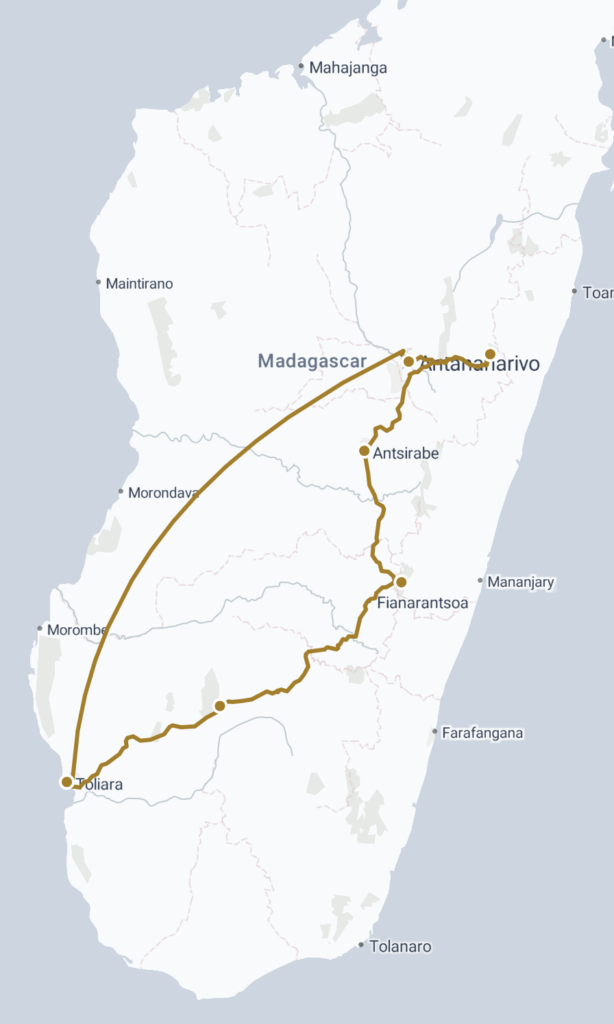
PLACES TO VISIT: Antananarivo – Andasibe – Antsirabe – Ranomafana – Isalo – Ifaty
ACCOMMODATION TYPE: Comfort-focused accommodation with breakfast and dinner where included
TRANSPORT TYPE: Private vehicle and regular flight where required
BACK TO ANTANANARIVO: Regular flight
ASSISTANCE: English-speaking guide and local specialist guides
AVAILABILITY: All year, with routing adjusted to season and flight availability
This Madagascar small-group safari is created for travelers who want reliable logistics, meaningful wildlife experiences, and a smooth travel rhythm. The price (double occupancy) is per person and subject to final travel dates and custom details.
For the clearest current departure hub, start with our Madagascar group tours page. It shows limited 2026-2027 departures, comfort-focused small-group pacing, availability guidance, and private upgrade options for travelers who want a well-supported Madagascar safari.
Upon arrival at Ivato International Airport, you will be warmly welcomed by the dedicated HT Agency Tours staff. As soon as you complete the standard customs procedures, our professional guide will assist you with the entire arrival process to ensure a smooth and stress-free start to your journey.
Our team will help you:
Exchange currency at reliable counters
Set up your mobile phone with a local SIM card
Organize any immediate needs after your flight
To make communication effortless throughout your stay, we will provide two local SIM cards, each including:
Mobile data
National calls
5 minutes of international calling
This ensures easy contact between you, our guide, and the rest of the team.
After completing all formalities, you will be transferred directly to your hotel in the city center for check-in. This first evening allows you to rest and prepare for the adventure ahead.
Night at the Novotel – Half Board Basis
After breakfast, we begin our day exploring Antananarivo, commonly called Tana. This lively capital offers a mix of history, culture, and panoramic viewpoints that reflect Madagascar’s rich heritage.
Our first stop is the Royal Hill of Ambohimanga, a UNESCO-listed site recognized for its historical, spiritual, and architectural significance. The area includes a royal city, ceremonial spaces, and sacred sites that have been central to Malagasy identity for centuries.
At the heart of the complex stands the Queen’s Palace, a powerful symbol of the Merina Kingdom—the dynasty that shaped Madagascar into a unified state. Since 1817, this hilltop has served as a place of pilgrimage and the resting ground for the kingdom’s sovereigns.
Standing atop the highest hill in Antananarivo, the site offers spectacular views of the surrounding landscapes, making it an unforgettable highlight of the day.
We continue our visit by driving to Independence Avenue, a vibrant boulevard lined with historical buildings, markets, and local activities. The tour also includes a stop at Anosy Lake, known for its iconic monument and pleasant atmosphere.
This part of the visit provides a clear picture of the diverse communities who gather in the city from all regions of Madagascar, contributing to Antananarivo’s dynamic cultural landscape.
We then take a beautifully scenic drive eastward toward Marozevo. The route offers sweeping views of terraced rice fields, rolling highland scenery, and traditional villages, creating perfect photo opportunities along the way.
In Marozevo, we visit the renowned Peyrieras Reptile Reserve, founded by naturalist André Peyrieras. The center is a remarkable place for discovering Madagascar’s biodiversity in a well-maintained environment.
During the visit, you can observe:
Several species of chameleons
Leaf-tailed geckos
Colorful butterflies
Various lemur species
Other fascinating endemic animals
This stop is a favorite for nature lovers and photographers looking for close-up encounters with Madagascar’s wildlife.
Night at Manjarano Lodge and Spa – Breakfast and Dinner Included
Today begins with an early start. Leaving the hotel at around 7:30 AM offers the best chance to meet the famous Indri Indri and the Diademed Sifaka in their natural rainforest habitat. The guided visit lasts approximately three hours, giving you plenty of time to explore one of Madagascar’s most iconic protected areas.
Within just one mile of Analamazaotra, you can hear the unique and haunting call of the Indri Indri. Their songs echo through the forest early in the morning, continuing until midday, and often again in the late afternoon. This sound is one of the most memorable experiences for safari travelers.
The Indri Indri, known locally as Babakoto, is the largest lemur species, reaching up to one meter in height. Andasibe is considered the very best location in Madagascar to observe them closely thanks to several well-habituated families.
Indris live in small family groups and, remarkably, cannot survive in captivity, making encounters in the wild even more meaningful. Across Madagascar, the Indri is regarded as a sacred animal, and many legends describe its origins and its special bond with humans.
Beyond the Indri Indri, the rainforest is home to more than 13 other lemur species, including:
Grey bamboo lemur
Woody lemur
Diademed sifaka
Brown lemur
Red mouse lemur
Red-bellied lemur
Black-and-white ruffed lemur
The elusive aye-aye
Each species contributes to the extraordinary biodiversity that makes this region a highlight of Madagascar group safari tours.
In the afternoon, you explore Andasibe village, often called the City of Waters. A stroll through its lively local market allows you to meet Malagasy craftspeople and observe traditional skills.
Your next stop is Lemurs Island, where you enjoy an up-close encounter with several friendly lemur species in their semi-wild environment. This experience offers excellent photo opportunities and deeper appreciation for conservation efforts in the region.
You then continue to the Vakona Reserve Zoo, home to:
A large crocodile river enclosure
Native bird species
Reptiles and small mammals
Additional lemur species
The reserve is well maintained and provides a comfortable setting for observing wildlife safely.
Around 6:30 PM, the adventure continues with a guided night walk lasting about 1 hour and 30 minutes. This nighttime excursion offers the chance to spot nocturnal species such as mouse lemurs, chameleons, tree frogs, and other fascinating creatures that only appear after dark.
After the night visit, you will return to your lodge for a relaxing evening at the end of a wildlife-filled day.
Night at Manjarano Lodge and Spa – Breakfast and Dinner Included
We begin the day with an early departure for a full-day journey through Madagascar’s remarkable landscapes. The route first takes us through dramatic eroded hills known as lavaka. These natural formations create spectacular reddish slopes that contrast beautifully with the surrounding farmland.
As we continue, the scenery shifts to terraced rice paddies, traditional thatched houses, and lush green valleys filled with fruit trees and vegetables. This region has a distinctive rural charm and showcases the agricultural richness of Madagascar’s central highlands.
We follow the RN2 westward, nearly reaching Antananarivo again, before turning south to join the famous RN7 highway, one of Madagascar’s most iconic road trip routes.
We continue to Behenjy, a small town celebrated for its artisanal production of pâté de foie-gras. Here, you can get a sense of how this unique culinary specialty contributes to the town’s identity.
Further along, we visit Ambatolampy, a town famous for manufacturing aluminum kitchenware. Watching the process—from melting the metal to shaping and polishing the pots—reveals the impressive skill of local craftspeople.
Our destination for today is Antsirabe, a charming highland city known for its wide colonial avenues, iconic colorful rickshaws, and cool climate. Its name, “The Place of Salt,” comes from its thermal springs, which have long drawn visitors seeking relaxation.
Founded by Norwegian missionaries in 1856, Antsirabe is often described as the only Malagasy city with a distinctly European feel. Its elegant spa facilities, historic buildings, and old railway station give it a distinctive character.
Thanks to its temperate climate, Antsirabe is one of the few regions in Madagascar where cool-climate fruits and vegetables thrive—such as apples, strawberries, carrots, and leafy greens.
Antsirabe is famous for its precious and semi-precious stone craftsmanship. During the city tour, we will visit several artisan workshops to see how stones are cut, polished, and transformed into jewelry and decorative pieces.
We also meet skilled embroiderers and craft makers whose delicate handiwork is part of Antsirabe’s long-standing artisanal tradition. These encounters provide a fascinating look at the creativity and talent of the local community.
Night at the Aro Hotel – Breakfast and Dinner Included
We continue our drive through the magnificent Highlands of Madagascar, where traditional houses display carved wooden balconies, brightly painted shutters, and elegant façades. The road offers a constantly changing panorama of rolling hills and peaceful rural life.
As we advance, we cross Le Col de Tapia, a region known for the tapia tree—an endemic species remarkably resistant to bushfires. These resilient trees support local ecosystems, including the silkworms used for traditional Malagasy silk production.
The scenery remains dominated by:
Photogenic terraced rice fields
Pine and eucalyptus forests
Rocky hills shaped by natural erosion
This part of the journey offers unforgettable photo opportunities.
We then reach Ambositra, widely recognized as the heart of Malagasy arts and crafts. This lively highland town is filled with workshops and boutiques showcasing the finest handmade pieces in the country.
Ambositra is particularly famous for its Zafimaniry artisans, known for their exceptional woodcarving skills. During a guided stroll, we visit small ateliers where skilled craftsmen work on:
Marquetry
Rosewood carvings
Ebony sculptures
Their artistry reflects generations of knowledge and a tradition recognized by UNESCO for its cultural significance.
We also meet Zafimaniry silk weavers who produce two varieties of Madagascan silk:
Landikely, a finer silk
Landibe, a thicker and more textured silk
Watching these artisans weave by hand offers insight into one of Madagascar’s most cherished traditional crafts.
Night at Thermal – Breakfast and Dinner Included
This morning, we enter the lush rainforest of Ranomafana National Park, accompanied by a specialist naturalist guide. This high-altitude reserve is one of Madagascar’s most important biodiversity hotspots and is most famous for being the place where the Golden Bamboo Lemur was discovered in 1986.
Ranomafana is home to:
12 species of lemurs, including the Golden Bamboo Lemur and the Milne-Edwards’ Sifaka
Numerous endemic chameleon species
Leaf-tailed geckos
Colorful Mantella frogs
A remarkable variety of forest birds, such as Ground Rollers
Our primary goal this morning is to search for the rare Hapalemur aureus, the Golden Bamboo Lemur, a species found only in Ranomafana National Park.
Ranomafana is especially rich in flora, sheltering plant species that do not exist anywhere else. Among the highlights are:
Several varieties of orchids
Numerous species of ferns
Rare high-altitude rainforest vegetation
Covering nearly 40,000 hectares, the park includes steep rainforest-covered hills, river systems, and humid valleys. Altitudes range from 800 to 1,200 meters, creating a range of microclimates that support exceptional biodiversity.
Ranomafana’s landscape is shaped by countless small streams cascading down into the Namorona River, creating dramatic scenery of waterfalls and fast-flowing waters. Although portions of the surrounding region were historically logged, the park still preserves significant stretches of primary forest.
This day involves strenuous forest walks, often along uneven terrain and slopes. Your guide will set the pace and select the best trails based on wildlife activity and weather conditions.
In the afternoon, we visit the orchid arboretum located near the village. This garden showcases many orchid species found in the region and provides opportunities to observe:
Chameleons
Geckos
Various small reptiles
We also visit a nearby Tanala community, known historically as forest-dwelling people from southeastern Madagascar. This visit provides insight into their way of life and their relationship with the surrounding rainforest.
After dinner, you may join an included night walk near the hotel. With the help of your guide, you will search for:
Rufous Mouse Lemur
Greater Dwarf Lemur
Nocturnal chameleons
Other night-active species hidden among the rainforest vegetation
Night walks are one of the best ways to observe Madagascar’s lesser-known wildlife.
Night at Thermal – Breakfast and Dinner Included
We depart early and drive south via Fianarantsoa, the cultural capital of Madagascar’s Central Highlands. The route continues to the charming rural town of Ambalavao, known for its pleasant climate and traditional architecture.
This town hosts one of the largest livestock markets in southern Madagascar (held on Wednesday mornings), attracting cattle herders from surrounding regions.
Our first activity is a visit to a local winery, where you will discover how Malagasy wine is produced using regional grape varieties and traditional techniques.
We then visit the renowned Antemoro paper workshop, where artisans produce this unique handmade paper from the bark of local trees. The technique is centuries old and was influenced by ancient Arab methods. Each sheet is crafted manually and often decorated with dried flowers, making it a beautiful and authentic Malagasy craft.
The visit continues with a stop at a silk factory, where you will learn about:
Traditional silk production
Spinning and weaving methods
Natural dye techniques
This is a fascinating insight into Madagascar’s long-established textile traditions.
We continue toward the Anja Community Reserve for a short but rewarding walk. This reserve is one of the best places in the country to see the charismatic ring-tailed lemur (Lemur catta).
Because of long-term coexistence with visitors, these lemurs are accustomed to humans and often remain close, offering excellent opportunities for observation and photography.
We proceed to Ihosy, the administrative capital of the region. The area is traditionally inhabited by communities renowned for their deep connection to Zebu cattle herding, an essential part of local culture and identity.
Further south, we approach the impressive Andringitra massif, a chain of volcanic peaks that acts as a natural transition between the lush Central Highlands and the drier landscapes of the south.
This region is characterized by:
Spectacular granite rock formations
Deep valleys
A striking mix of highland and southern vegetation
As we continue, the vegetation becomes more arid, and the scenery shifts to vast dry plains and towering sandstone formations. We pass through the iconic “Porte du Sud”, a symbolic gateway marking the entrance to Madagascar’s Great South.
We then cross the wide and desolate Horombe Plateau, known for its intense red soil, before reaching Ranohira in the late afternoon. This town serves as the gateway to the spectacular Isalo National Park, famous for its canyons, rock formations, and dramatic sunsets.
Night at Rock Lodge – Breakfast and Dinner Included
Today, we explore the breathtaking landscapes of Isalo National Park, one of Madagascar’s most iconic natural treasures. The park is renowned for its dramatic combination of desert plains, deep canyons, sandstone massifs, grassy plateaus, and palm-fringed oases. The diversity of its scenery makes Isalo a highlight of any Madagascar group safari tour.
Isalo is home to three emblematic lemur species, and our walk offers excellent chances to see:
Red-fronted Brown Lemurs
Ring-tailed Lemurs (Lemur catta)
Verreaux’s Sifaka, known for its elegant, loping, bipedal movement
These species are often seen in small groups, moving gracefully through the dry forest and rocky environments.
The flora of Isalo is equally remarkable, featuring several species adapted to the region’s semi-arid climate, including:
Uapaca bojeri, a native tree
Pachypodium rosulatum, also called the elephant’s foot
Aloe isaloensis, an aloe species found only in Isalo
These plants thrive in the rocky, sun-exposed habitats and contribute to the park’s distinctive ecological identity.
The eroded mountains of Isalo also hold cultural importance. Historically, some formations served as temporary resting places where local Bara communities kept their deceased before final burial in traditional tombs. This practice reflects the deep spiritual connection between local people and the surrounding landscape.
Today’s visit involves strenuous walks through rugged terrain, with your guide selecting trails based on conditions and wildlife activity. A picnic lunch inside the park allows you to enjoy the scenery at a relaxed pace amid the natural beauty.
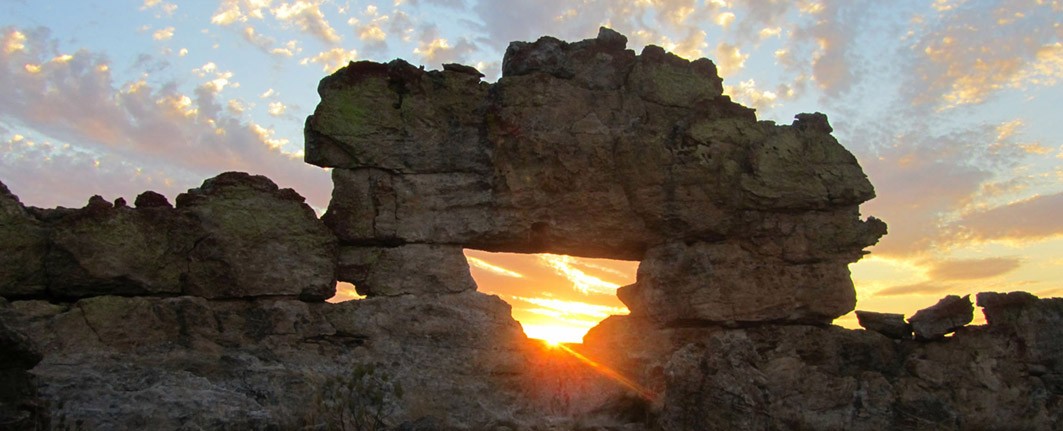
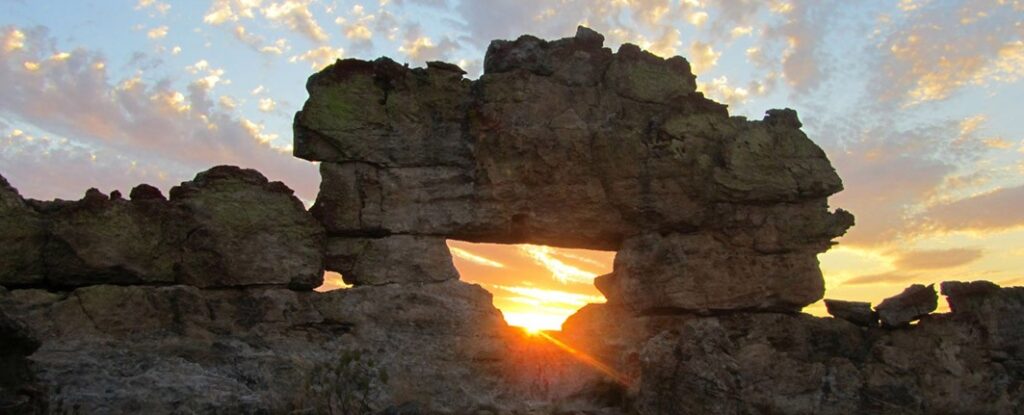
In the late afternoon, we drive back to the lodge, stopping at the iconic “Window of Isalo”, a natural rock formation perfectly aligned with the setting sun. This is one of Madagascar’s most famous sunset viewpoints, offering:
Brilliant golden light
Silhouettes of sandstone arches
Panoramic views over the plains
It is the perfect way to end a day of exploration in this extraordinary national park.
Night at Rock Lodge – Breakfast and Dinner Included
Today, we continue our journey southward along the paved RN7, following the road to its endpoint in Tuléar (Toliara)on Madagascar’s southwest coast. This transition gradually reveals a completely new world of landscapes, from dry western forests to the striking spiny desert ecosystems of the south.
On the way, we drive through Ilakaka, a town that experienced a rapid sapphire boom in the late 1990s. Once a quiet village, it transformed almost overnight into a bustling mining frontier town with an atmosphere reminiscent of the historic “Wild West.”
As we continue, we pass locations known for their ornate Mahafaly hillside tombs. These burial sites—built for respected leaders and important members of their communities—are decorated with:
Sculptures
Stone structures
Zebu horns
Some tombs display hundreds of zebu horns, symbolizing honor and status.
Because these sites are sacred, we observe them from a respectful distance. Photography is not permitted.
We also pass through regions associated with Antandroy communities, well known for their cultural traditions and resilience in one of the driest parts of Madagascar—often referred to as the Deep South.
Here, the landscape is dominated by:
Spiny forests
Cactus-like euphorbias
Dramatic open plains
This unique ecosystem is one of the most arid in the country.
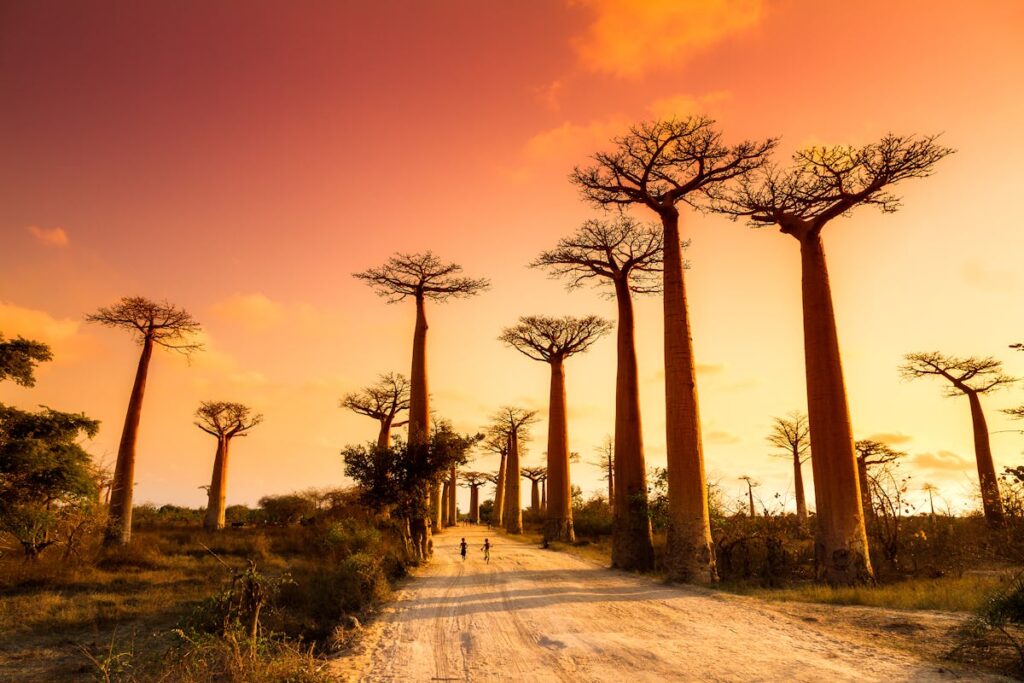
The scenery becomes increasingly dramatic, with enormous baobab trees, some hundreds of years old, rising from the sandy earth. For most of the year, these trees remain leafless, giving their branches the appearance of roots—hence the nickname “upside-down trees.”
The local communities of the region live in challenging conditions, often struggling to find drinking water. The deep southern landscape tells a powerful story of survival, adaptation, and tradition.
Upon reaching Tuléar, we continue north along the RN9 to the fishing village of Ifaty, situated on the stunning coastline of the Mozambican Channel.
Here, mangroves fringe the beaches, and traditional Vezo coastal communities live closely connected to the sea.
You will see piroques—traditional dugout canoes—departing twice daily for fishing. Men head out to sea while women and children wait along the shore to collect the catch and prepare it for transport to the markets of Tuléar.
Before reaching your hotel, we enjoy a one-hour guided visit to the Reniala Reserve, also known as the Spiny Forest. This area is home to:
Impressive baobabs
Endemic plant species
Unique desert-adapted vegetation
It is one of the best places to understand the botanical richness of Madagascar’s arid ecosystems.
Night at La Mira – Breakfast and Dinner Included
For your final day in Madagascar, you will be transferred to Tulear Airport for your domestic flight back to Antananarivo. Our team will assist you with check-in formalities to ensure a smooth and stress-free departure.
Upon landing in the capital, you are transferred into town for a shopping stop at the La Digue Craft Market. This is one of the best places to find traditional Malagasy handicrafts and souvenirs such as:
Wood carvings
Embroidered textiles
Handmade jewelry
Decorative home items
Local art pieces
Depending on the flight schedule and time of arrival, there may be an opportunity for last-minute purchases.
After shopping, you will be transferred directly to Ivato International Airport for your outbound international flight.
This marks the end of your journey through Madagascar’s diverse landscapes, remarkable wildlife, and rich cultural heritage.
END OF THE TOURS
Luxury Madagascar with the best luxury African safari tours packages. Discover your next perfect destination with HT Agency Tours