

November 25, 2026
Itinerary & Route Planning
Build a route that protects the experiences that matter without underestimating travel time.
Written by HT Agency Tours’ Madagascar-based travel teamLast reviewed October 24, 202610 min read
Considering a refined shared journey?
Explore Madagascar Group Tours→Planning brief
At a glance
- Article type
- Itinerary & Route Planning
- Planning focus
- Route and pacing
- Best for
- Travelers shaping a coherent Madagascar itinerary
- Reading time
- 10 minutes
Madagascar group tours September 2027: essential planning priorities
Choose a small number of priorities. Forest wildlife, limestone landscapes, baobabs and a broader travel story require different locations and uses of time. A route that is excellent for one combination may leave too little time for another.
Think about the images you enjoy making, not only the subjects you have seen online. You might prefer observing behavior, composing landscapes or documenting a journey through several environments. That distinction helps the planner understand whether a broad discovery group or a more focused arrangement would suit you.
Identify what you can leave to chance. If every hoped-for image is treated as essential, a shared itinerary may feel restrictive. A realistic photographic brief distinguishes the route's planned opportunities from the moments that depend on the actual day.
Decide whether photography is the purpose or part of the holiday
A general group tour can offer enjoyable photographic opportunities while following a schedule designed for varied interests. If you are happy to work within that rhythm, you may value the mix of company, guiding and discovery as much as the images.
If you expect long waits, repeated visits or substantial changes to departure times, explain that before booking. Those requirements can affect the whole group. Ask whether the selected departure is designed to support them or whether another format is more appropriate.
This is not a judgment about the quality of your camera or skill. A traveler with a small camera may want a highly focused schedule, while someone with extensive equipment may be content with ordinary stops. The important factor is how photography changes your preferred use of the day.
Build a route around subjects rather than famous names
For each destination on your shortlist, write the subject or experience it adds. If two stops serve the same purpose, consider whether both are necessary within your available time. If one involves a long detour, ask whether its contribution justifies the travel.
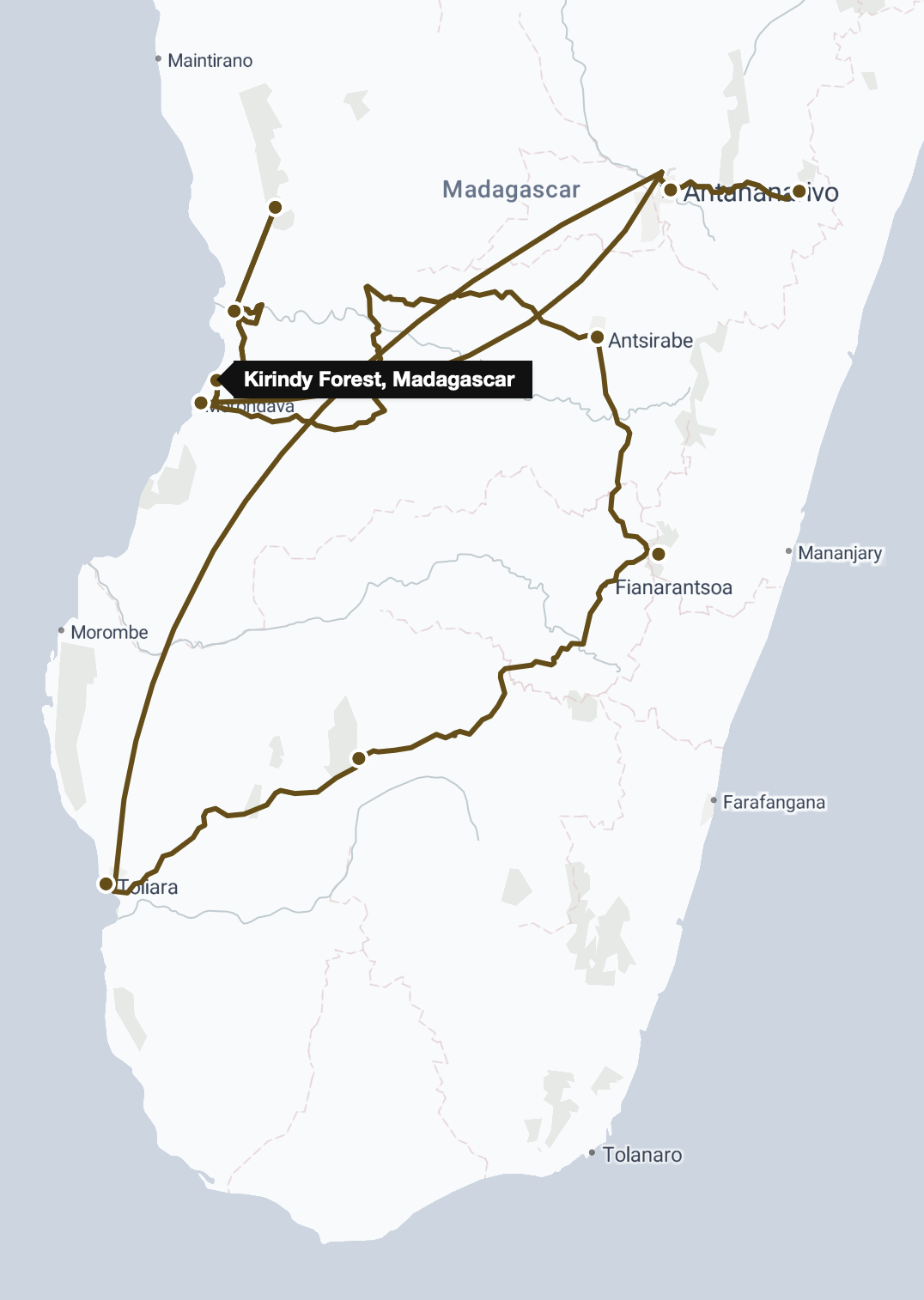
The Tsingy group route is a starting point for western landscape interests. The classic eastern and southern route offers another kind of journey. Request the actual September itinerary and compare its planned visits with your photographic priorities.
Avoid judging the route only by the number of recognizable locations. One thoughtful visit with appropriate time can be more satisfying than several hurried appearances. Choose a journey whose structure allows you to enjoy being in the places you want to photograph.
Understand forest photography as an observation experience
Forest visits involve attention, patience and following the guide's direction. Ask which parks or reserves are included and how the walks are organized. A regional overnight stop does not establish the exact sites or the time available at each.
Tell the team whether wildlife identification is important alongside photography. You may value a guide who helps explain what you are seeing rather than treating each subject as an isolated image. That interest should shape your choice of departure.
Plan to enjoy the wider environment when a hoped-for animal is not visible. Vegetation, textures, behavior and the process of exploration can all contribute to a photographic journey. A satisfying forest day does not need to depend entirely on one close encounter.
Assess landscape outings through their actual timing
Ask how the itinerary allocates time at the landscapes that matter most. A stop during a transfer has a different purpose from a dedicated excursion. Both may produce enjoyable photographs, but they should be understood as different opportunities.
If a particular time of day is central to your plans, ask whether the shared program actually provides it. Do not infer sunrise or sunset access from a promotional photograph. The transport, site arrangements and daily route determine what is proposed.
Keep expectations about light flexible. The schedule can create an opportunity to be somewhere at a planned time, but it cannot guarantee the scene you have imagined. Choose subjects and a route you would still appreciate under varied conditions.
How to compare Madagascar group tours September 2027
Ask about the terrain, duration and physical features of the planned walks. Consider how carrying your equipment changes your comfort compared with walking without it. A route that sounds manageable in general may feel different with a heavy bag.
If the tour includes Tsingy, request the exact proposed circuit and discuss any concerns about heights or movement on the route. The destination label alone does not describe the demands of every excursion. Your camera should fit the activity rather than making it awkward to participate.
Consider which equipment is truly useful for each outing. You may not need to carry the entire kit every day, but storage and access arrangements should be discussed rather than assumed. Ask the operator what practical options exist within the confirmed program.
Talk about vehicles and luggage before booking
Describe the size and nature of the equipment you intend to bring. Ask about the planned vehicle configuration, luggage space and any domestic flight conditions. International airline allowances should not be assumed to apply to every sector of the safari.
If quick access to a camera during road travel matters, ask how bags are normally stored. Do not expect the vehicle arrangement to be redesigned spontaneously around one guest's kit. Early discussion helps identify whether the shared setup will work for you.
Ask how viewing positions and seating are handled without assuming a preferred seat is reserved. A shared vehicle serves the whole group. The best fit is an arrangement you can enjoy while respecting other travelers' access to the experience.
Make waiting time a shared expectation
Photography sometimes involves staying with a subject while others are ready to move on. Decide how much waiting you consider essential and ask whether the tour's purpose supports it. A general sightseeing departure may have commitments that limit extended stops.
Explain your preferences in practical terms. Saying that you would like occasional extra minutes is different from asking to remain at one location for much of the day. The planner can assess a concrete request more easily than a broad claim that photography is important.
If the required rhythm does not fit, consider a specialist or private arrangement. That can be more satisfying than joining a general group and repeatedly feeling rushed. The objective is an honest match between the shared schedule and the way you want to work.
Plan charging and image organization around the route
Ask about the relevant facilities at the proposed accommodation if charging equipment is important to your routine. Do not assume identical arrangements throughout the journey. The itinerary may include properties with different settings and services.
Think through your own storage and organization before traveling. A simple daily habit can prevent images and equipment from becoming an evening burden. Choose a method you already understand rather than relying on an unfamiliar process during a busy tour.
Keep the plan proportionate to the holiday. If managing equipment consumes all your free time, reconsider what you are bringing and how many images you intend to produce. The journey itself should remain enjoyable alongside the photographs.
Photograph people with courtesy and clear consent
If your interests include people or everyday scenes, ask your guide how to approach the situation respectfully. Do not treat a public setting as an invitation to turn someone into a subject. A conversation and willingness to accept a refusal matter more than getting the image.
Avoid assuming that a tour includes access to every setting shown in promotional materials. Ask which visits are actually part of the program and what expectations apply. Cultural encounters should be understood through the arrangement being offered, not as interchangeable photo opportunities.
Think about what your images communicate. A thoughtful travel story can show context and ordinary life without staging a scene around your expectations. This approach also helps you remain present in the experience instead of reducing each stop to a collection task.
Keep wildlife observation at the center
Follow the guide's and site staff's instructions about position, distance and equipment use. Ask before doing something that may affect the animal or the visit. A desired photograph is not a reason to disregard the local direction given to the group.
Let behavior unfold without insisting on a particular pose or location. You can make a strong record of an encounter while accepting the limits of the moment. Patience and observation often add more to the experience than repeated demands to get closer.
Discuss your expectations during planning if you have specific techniques in mind. The answer may depend on the site and activity, so avoid assuming permission from general destination information. Appropriate practice should be part of the photographic brief from the beginning.
Allocate the September window realistically
Show the full arrival and departure window in your inquiry. Include any additional days you want for photography outside the shared tour. The team can then assess how a focused extension might connect with the group route.
Count complete days at your priority locations, not only accommodation nights. Arriving late and leaving early creates a different opportunity from a full day on site. Ask for the likely sequence so you can evaluate the usable time.
If the window is tight, reduce the number of regions before trying to compress every activity. A photographic journey benefits from time to notice and respond. Removing one destination may improve the experience of the others more than any equipment upgrade could.
Compare proposals through a photographer's checklist
For each option, note the priority subjects, included visits, walking demands, longest transfers and room arrangement. Add the practical answer about equipment and flights. This creates a useful comparison of the actual journey rather than a contest between promotional images.
Ask which activities are included and which would require an extra arrangement. If an extension or private guide is proposed for a specific interest, make its scope and price clear. Keep the group portion and any individualized services distinguishable in the quotation.
Review the current departure status and booking conditions before proceeding. A 2027 route description is not live inventory. Request confirmation of the date, rooms and services relevant to your party, and check any remaining dependencies before arranging connected travel.
Frequently asked questions for traveling photographers
Do I need a dedicated photography tour? Consider one if your essential needs involve sustained waiting, repeated locations or a schedule centered on images. A general group can suit photography that fits naturally within its shared program.
Will September guarantee ideal light? No month guarantees a particular scene. Choose a route with appropriate opportunities and remain flexible about the conditions you encounter.
Can I bring a large equipment bag? Describe it before booking and request the applicable transport and luggage arrangements. Do not assume the international allowance determines the limits of every local sector.
Can I stay behind while the group moves on? Ask about the actual location and transport plan. Separate time can require additional services and should not be assumed to be included.
Can my non-photographer partner enjoy the same tour? Compare the daily program together. A balanced discovery route may suit both interests, while a strongly specialized schedule should be understood before either traveler commits.
Request a September 2027 route for your interests
Contact HT Agency Tours with your dates, rooming, preferred subjects and the role photography plays in your holiday. Describe your equipment and comfortable walking level so the practical fit can be assessed.
Use the group itinerary collection to identify a starting route, then ask for a current proposal. A good photographic holiday combines suitable places, enough time and a shared rhythm you can enjoy, while leaving space for the unexpected moments that make travel memorable.