

October 30, 2026
Itinerary & Route Planning
Build a route that protects the experiences that matter without underestimating travel time.
Written by HT Agency Tours’ Madagascar-based travel teamLast reviewed October 2, 202611 min read
Considering a refined shared journey?
Explore Madagascar Group Tours→Planning brief
At a glance
- Article type
- Itinerary & Route Planning
- Planning focus
- Route and pacing
- Best for
- Travelers shaping a coherent Madagascar itinerary
- Reading time
- 11 minutes
Decide what fifteen days should make possible
Write down the benefit you expect from a longer safari. Perhaps you want a wider variety of landscapes, more guided wildlife time or a route that includes a relaxed finish. Those are different objectives, and they lead to different ways of allocating the same number of days.
Also decide whether the advertised tour duration fits your complete travel window. International travel, joining arrangements and any additional nights can require time outside the numbered program. Establish those limits before becoming attached to a departure that leaves no practical space at either end.
Distinguish tours that share the same duration
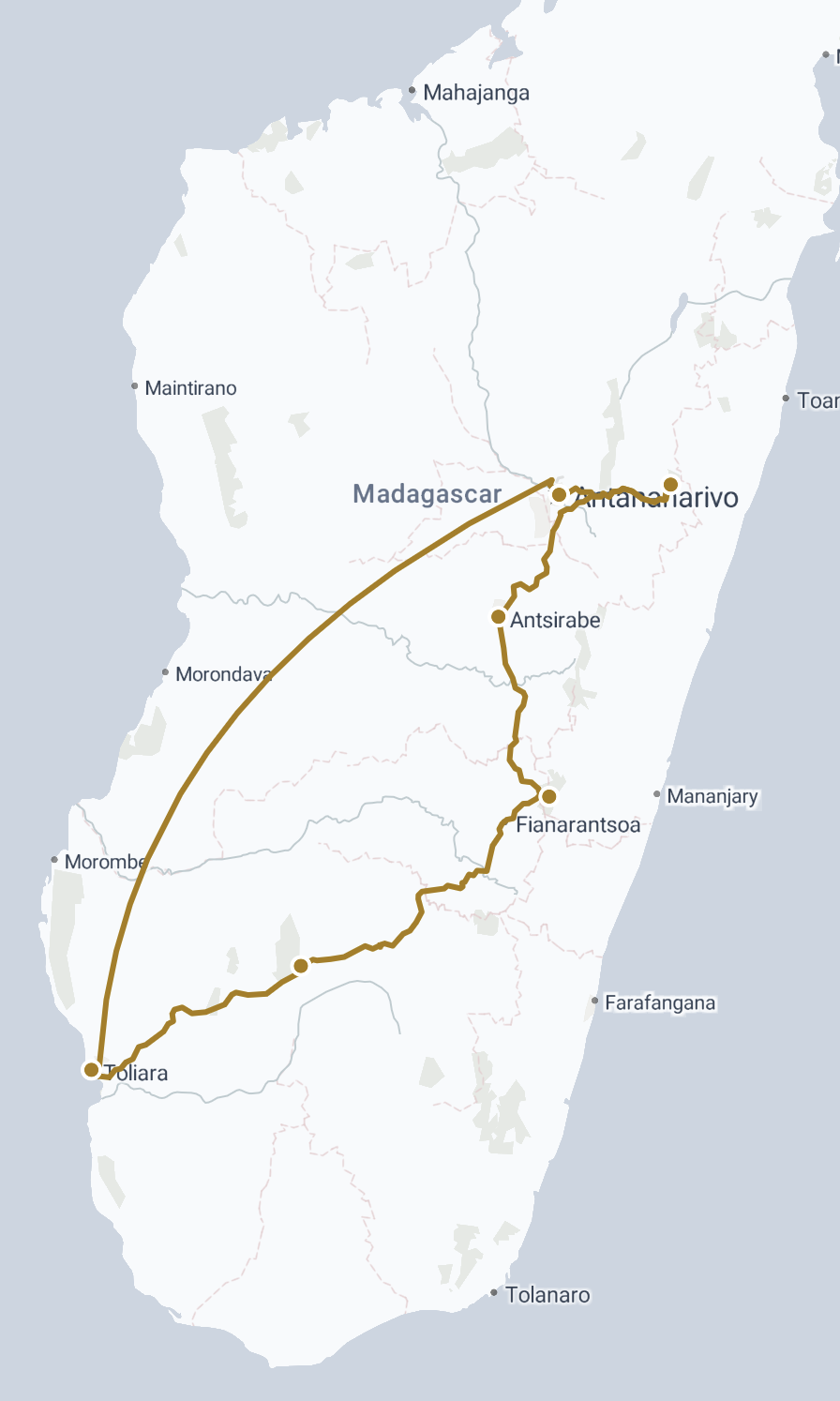
A shared duration does not make two products equivalent. HT lists a 15-day small-group safari and a separate 15-day private charter journey. They should be assessed through their current routes, group arrangements, accommodation and transport rather than compared only because both use fifteen days.
Request the actual proposal for the date you intend to travel. A product's older departure information does not establish its current operation or the services available for a future trip. Confirm the route version and ask which details remain subject to availability.
When comparing options, use the same room basis and personal requirements. That makes it easier to identify whether a higher total reflects different transport, additional comfort or a different geographic scope. The useful comparison is between complete journeys you would genuinely consider booking.
Draw the overnight sequence before reading every highlight
Write the overnight destinations in order on one page. Mark each change of accommodation and underline places with more than one night. This gives you a quick view of the route's rhythm without getting lost in descriptions of every excursion.
Next, ask when you arrive at and depart from the longer stays. Two nights do not necessarily create two full days of exploration. Arrival timing and the next transfer determine how much of that stop is available for activities, rest or enjoying the accommodation.
Look for consecutive one-night stops and decide whether that pattern suits you. Some travelers enjoy moving steadily through different places; others prefer the familiarity of returning to the same room after an outing. Neither preference is wrong, but it should be reflected in the tour you choose.
Separate activity days from connection days
For each numbered day, identify its main purpose. It may be a substantial guided visit, a transfer between regions, arrival arrangements or free time. Some days combine several elements, but the dominant use of time should still be understandable.
Ask for clarification when an itinerary lists several stops without indicating how the day functions. A named destination could involve an extended visit or a brief pause en route. The distinction matters when that place is one of your reasons for choosing the trip.
Do not dismiss every transfer day as lost time. A journey can include interesting stops and changes of landscape. Instead, assess whether the travel serves your priorities and whether the program sets realistic expectations about arrival and activity time. The aim is a balanced route, not a claim that every hour must be spent sightseeing.
Give special attention to the middle of the journey
The beginning and end often receive the most attention during planning, but the middle determines whether the holiday's pace remains enjoyable. Review the central sequence for repeated moves, demanding outings and opportunities to settle into a place for more than one night.
Consider what follows the longer travel days. An early start for an active walk may suit you, or you may prefer a gentler morning. Ask whether the schedule has that flexibility or whether another itinerary would fit your preferences better. A longer duration does not automatically mean a slower daily rhythm.
Also look at variety. A change from focused nature visits to a different kind of activity can be welcome, while others may prefer sustained attention to one interest. Explain which pattern appeals to you rather than asking for a generally relaxed tour without defining what relaxed means.
Allocate wildlife time according to your interests
If wildlife is central to your holiday, identify the habitats visited and the number of guided outings. Ask how much time is planned at the relevant stops and whether the program offers more than one opportunity to explore a place important to you.
A list of species associated with a destination is not a schedule of encounters. Decide whether you would enjoy the walk, interpretation and habitat even if a particular animal is not seen. A varied nature experience can remain rewarding without turning every sighting into a condition of the holiday.
For photography, birdwatching or another specialist interest, discuss the expected pace explicitly. A general-interest departure may maintain a shared program that differs from a specialist expedition. Additional time or guiding may be worth considering, but the arrangement should be explained before you reserve.
Compare flying and overland sections by their purpose
A longer Madagascar itinerary may use different transport types to connect its regions. Ask for a sector-by-sector explanation of the proposed route, including any internal flights and the ground arrangements around them. Do not infer the complete plan from a flying or charter label.
Evaluate what each transport choice makes possible. It might create more usable time at a destination, connect a wider regional combination or change the sequence of the holiday. Compare those benefits with your priorities rather than treating flight duration as the entire travel day.
Clarify whether any flight is scheduled, shared or reserved exclusively for your party. Request the actual baggage requirements and identify any equipment needs early. These details affect both packing and the meaning of the quoted service, especially when comparing two itineraries with different transport arrangements.
Match accommodation to the time you spend there
Request the proposed properties and room categories for each stop. Then examine how each stay supports the itinerary: the journey to the activity, expected meal timing and time available at the property. Accommodation should be considered as part of the travel experience, not only through photographs.
If you value quiet afternoons or facilities at the lodge, identify where the schedule lets you enjoy them. A preferred property may contribute more during a longer stay than during a short overnight stop. Explain where you would most appreciate additional comfort when discussing upgrades.
Confirm the bedding and room configuration for your party. A double room, twin room and single room are distinct requests. If a particular feature is essential, have it checked at the intended accommodation and ask how a substitution would be assessed if the original property cannot be confirmed.
Check walking demands across the whole tour
Assess the activities as a sequence rather than treating each walk in isolation. Ask about the planned duration, terrain and practical features of the most demanding outings. Mention anything that could affect your participation before choosing the departure.
A party may include people with different preferences. Establish whether a shorter outing or rest option is available, how it is coordinated and whether it requires additional guiding or transport. Do not assume every shared activity can be redesigned once the group reaches the destination.
Think about your usual travel habits honestly. If you enjoy a full program, a busy itinerary can be a good fit. If you prefer fewer structured hours, ask where the route creates genuine personal time. The correct choice is the one you can enjoy throughout the fifteen days, not only on the most appealing headline excursion.
Decide where a coastal stay belongs
Some travelers want the coast to be part of the main safari; others prefer an individually arranged extension afterward. Ask which arrangement the proposed tour includes and how the coastal section fits with the rest of the route. The same number of nights can serve different purposes depending on the connections.
If your goal is rest, compare the usable time at the destination with the time spent getting there and leaving. A short stay can feel very different when it falls between two substantial travel days. Protect enough time for the experience you actually want from that part of the holiday.
If you add an extension, keep its accommodation, meals and transport visible as a separate part of the proposal. Confirm how it connects with the group's final day and your international departure. The complete holiday should fit together without relying on unpriced or unconfirmed assumptions.
Use a simple itinerary audit
Create a line for each day and record four things: overnight location, main activity, principal transport and any personal time. You do not need a complicated spreadsheet. A clear page can reveal patterns that are harder to notice in long promotional descriptions.
Mark the experiences that correspond to your three priorities. Then ask whether they receive enough time relative to everything needed to reach them. If a priority appears only briefly while many days serve less important additions, discuss whether another route would be a stronger match.
Finally, mark the questions that could change your decision. These might concern a circuit, a flight arrangement or a room type. Resolve those before comparing minor extras. A useful audit helps you choose; it should not become an attempt to predict every minute of a journey that remains subject to real operating conditions.
Compare value without relying on cost per day alone
A daily average may help organize a budget, but it cannot explain the difference between two fifteen-day safaris. Accommodation categories, flight arrangements, guided activities and included services can vary considerably. Compare the full proposal on the same occupancy basis.
List meals, park visits, guiding, transfers and internal transport alongside the room arrangement. Identify optional activities, supplements and extensions separately. Ask which services are confirmed in the quote and which remain subject to availability or another check.
Then decide what the difference means to you. More time in a preferred region, a better-fitting joining plan or a room arrangement you value may justify a higher total. The goal is to understand the holiday you would receive, not to select an attractive number disconnected from its services.
Coordinate the joining and return arrangements
Ask where the group meets and what happens on the first numbered day. If it includes a substantial activity or transfer, your arrival must fit that plan. Request any additional night or separate transfer as part of the proposal rather than leaving it as an assumption.
At the other end, identify the final overnight location and any internal connection before your international journey. Share proposed flight details with the planning team so the full sequence can be reviewed. Tour duration alone cannot establish which arrival or departure timing will work.
For friends arriving from different places, record each person's arrangements while keeping the main safari decision coordinated. One traveler may require an extra night or transfer that another does not. A clear written proposal should distinguish those individual services from the shared tour.
Questions about a 15-day Madagascar group tour
Does fifteen days mean the trip covers the whole island? No duration alone guarantees complete geographic coverage. Read the actual route and choose the combination of regions that best serves your interests. A focused journey can be more satisfying than a wider one that feels rushed to you.
Is a longer itinerary automatically easier? No. Walking demands and travel rhythm depend on the program. Ask about the activities and their sequence, and describe the pace you prefer before booking.
Can I join without a companion? Inquire for your chosen departure and room basis. Ask about available guest places, accommodation and the current operation status together. Individual participation does not automatically require a shared bedroom.
Can I shorten or extend the tour? Ask whether a workable arrangement exists and how it affects transport, guiding and price. An extension may be simpler to assess than leaving a shared route partway through, but the actual proposal determines what is possible.
What should I request before reserving? Obtain the current day-by-day itinerary, room arrangement, accommodation proposal, transport details, inclusions, exclusions and joining instructions, together with the departure status and applicable booking terms.
Request a fifteen-day journey that fits your priorities
Send HT Agency Tours your preferred dates, party size, room needs and three main interests. Describe whether you value broader coverage, deeper exploration or a combination, and include your preferred walking pace. Mention any planned extension and whether international flights are already arranged.
Use the 15-day group safari and the wider group-tour collection as starting points for the discussion. Ask for a clear explanation of the travel days and overnight pattern in the current proposal. With the route and rhythm understood, you can choose a departure for the experience it offers and move toward a considered reservation.